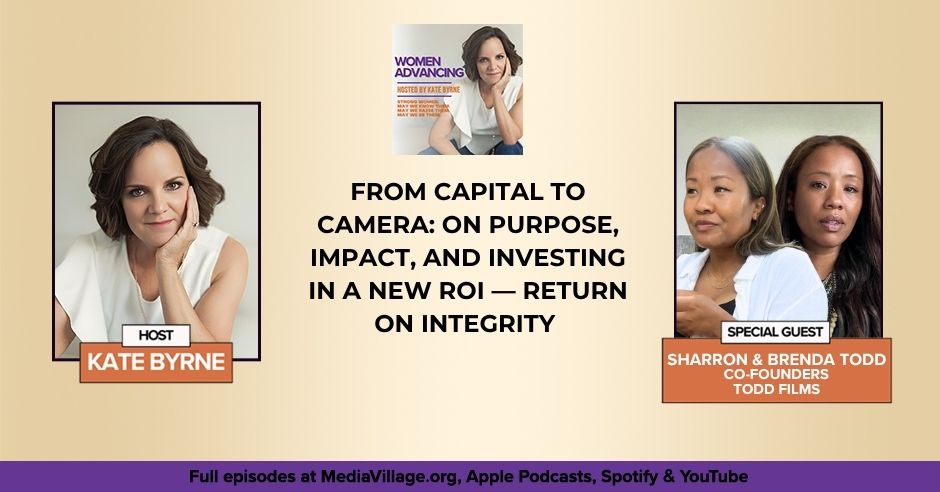
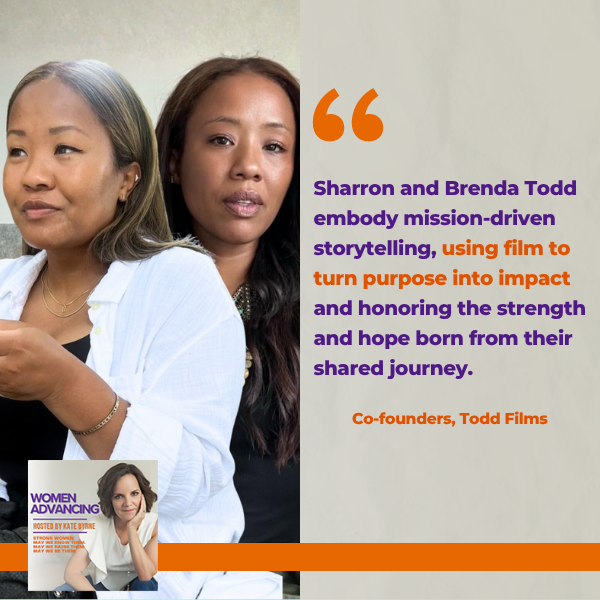
At its best, mission-driven storytelling connects purpose with impact—and that’s exactly what sisters Sharron Todd and Brenda Todd, co-founders of Todd Films, set out to do. When Sharron’s breast cancer diagnosis became a life-altering wake-up call, she and Brenda turned their experience in venture capital and marketing into a creative force for good. Together, they’re redefining how film can amplify the voices of nonprofits and social innovators, transforming empathy into visibility and visibility into action. In honor of National Breast Cancer Awareness Month, this episode celebrates resilience, reinvention, and purpose. Through humor, honesty, and courage, they remind us that purpose can be the most powerful return of all—a true Return on Integrity.
—
Watch the episode here
Listen to the podcast here
From Capital To Camera: Co-Founders Sharron And Brenda Todd Of Todd Films On Purpose, Impact, And Investing In A New ROI — Return On Integrity
This episode is personal. I’m doing this in support and recognition of National Breast Cancer Awareness Month. My mother passed from breast cancer, and I’ve had several friends who are either battling it or on the other side and victorious. It leads me to my conversation with our guests. Sometimes, it takes a shock to the system to wake us up.
For sisters Brenda and Sharron Todd, the Founders of Todd Films, that wake-up call came when Sharron, who was a venture capitalist who’d spent the majority of her time funding everyone else’s visions, was diagnosed with breast cancer. In that moment, everything shifted as you can well imagine. Instead of managing portfolios, she went on to start managing her own purpose.
Together with her sister, Brenda, they left finance and marketing respectively to go and launch Todd Films, which is a creative studio that tells the stories of nonprofits and social impact innovators who, far too often, go unseen and unfunded. As biracial sisters, Korean and Black, they’ve spent their lives translating between two worlds. Now, they’re using film to do the same for impact, though, turning empathy into visibility and visibility into capital.
In this episode, we’re going to talk about what happens when life forces you to stop waiting for someday and take that leap. The leap from capital markets to creative storytelling and the transferability of skills are more common than you think. We’ll also talk about how Todd films’ potential return that it hopes to bring is reframing storytelling as a form of social investment.
Sometimes, the biggest returns come when you stop chasing numbers and you start chasing meaning. Tune in. Stay to the end. There are some great KB Takeaways, if I do say so myself. Let me know what you think.
The Big Leap: From Venture Capital To Filmmaking
Welcome, readers. Please join me in saying a warm hello to our guests, two fantastic filmmakers who are on your to-watch list. That is the powerful sister team of Sharron and Brenda Todd, who are the Cofounders of Todd Films. Welcome.
Thanks, Kate. It’s nice to see you. Thanks for having us..
It’s our pleasure. It’s good to see you, too. I love your story because it’s an important one for all of us to know, especially with all these crazy times. Life is short. There are twists and turns. I know you’ve had a few on your own. Let’s open up and talk a little bit about your personal journeys and, frankly, the pivots that led you to where you are. Let’s start with that big leap, because so often, that’s hard to do. We’re in a comfy situation. What was the moment, or there might have even been a few of them, that pushed you both to found Todd Films?
Sharron and I are four years apart in age, but we’re super close. Since we were little kids, we’ve been putting on plays. Sharron’s first play was called Mansion of Problems. She was the writer and director, and I was the producer and the boss on set. I was friends with all of her friends who were older. We put on this big play on an Army base in South Korea, where we grew up. Our whole family is very artistic. Our sister’s in theater. Our dad’s a singer. Our mom’s an artist. We’ve always been creative. Were you eleven, Sharron?
I was eleven. You were seven.
We knew that one day, all roads would lead to filmmaking.
We’ve always had big imaginations.
I love, Brenda, that you were the boss lady at age seven.
We would hold auditions, and I would cut people at seven years old.
We held full-blown auditions.
Nice work. The thing about that is, so many young girls start with that, and then as we get a little bit older, around age 11 and 13, it diminishes. I have found that it often comes back. There comes this point where you’re like, “To heck with this.” That voice starts going, “Let me out of my box.” It comes back to roost. We know each other from the venture capital world. It’s a world of risk. It’s got returns. It’s a strategy. What happened to you that made you say, “It’s time now.”
A Life-Altering Diagnosis: The Catalyst For Change
One major event was being diagnosed with breast cancer in 2025 and, thank God, surviving it. By the end of 2025, we’ll have reached a good point in life.
Congratulations.
Thank you so much. It was a very long journey, even after finding out that I had localized cancer. There’s the process of finding out how bad the tumor is and undergoing a mastectomy. There were a lot of changes. It has been on my heart. Brenda and I have talked about this, since we owned our businesses before, that we would start another business, and the core would be storytelling via film. It was just an idea.
After being diagnosed with breast cancer and going through that time period, “Why not now?” became the question. I was like, “Why not right this second?” Before even the first surgery, we had formed Todd Films officially. We’ve made films before, but we decided, “Let’s go full-blown. Let’s not wait.” Breast cancer is one of those things where it is typically a life-and-death situation if it’s not taken care of. You realize how much control you do not have over life. That was certainly a major catalyst in us doing that.
Let’s dig a little deeper. What’s the difference for you when you were saying, “We decided to go full-blown.” As opposed to making it a hobby, it’s clearing the decks. You’re like, “This is our thing that we got to devote every ounce of energy that we have, as well as political capital, relational capital, and financial capital toward.”
Full-blown would mean doing it afraid and doing it without all the answers. It also means employing all that you’ve learned in a corporate space. It is taking all the best practices from marketing, storytelling, and filmmaking, and infusing them so that you could make a living off of it, and then also simultaneously do something you’re passionate about. That’s full-blown and not doing it as a side thing.
We come from impact-driven venture capital. Those times trained you up for moments like this as well. We were like, “We have all the components that we need to drive and build a successful business.” It can very well be a business that we are super passionate about in our personal lives. That’s what the full-blown was. We were like, “In this climate, during this time, we’re going to go from mission-driven films.”
A caveat of not being in your early twenties anymore. Going full-blown also means that you’re trying to avoid living with ten other people in your New York City apartment and trying to sell your script. As Sharron said, how can we fuse everything that we’ve learned, whether it’s in corporate or tenures with our business in Helsinki, and turn it into a business model that we’re passionate about and that can keep a roof over our heads? When you’re in your twenties, you’re like, “Let’s go to LA and become an actress.” That’s the starving artist mentality. How can we be responsible within whatever the frame of responsibility means for us in our forties?
Transferable Skills: Bridging Corporate And Creative Worlds
I love that point of taking those skills that you have from corporate and translating them. I’ve often wished that I had created an app that translated, like, “In marketing and finance, they call this as this. In education, they call this as this,” so we become more fluid. At the end of the day, there are so many skills that are applicable. If more people understood that, they’d feel comfortable making a pivot and taking a leap. Women especially don’t know how to do this. I’ve been doing that forever.
I’ve been doing it forever. It doesn’t have to look like anyone else’s journey. That’s taking the leap. Oftentimes, it’s great to have mentors and examples of people who’ve done it before you, but if you consider my sister and me, in these kinds of spaces, we represent less than a fraction as Black Korean women. You can add on a whole slew of other things.
We wait until enough of us have made films or enough of us have gone to start a business, and we would never do it. To Brenda’s point, when you are no longer in your twenties and, hopefully, less impressionable than you were when you were in your twenties, you start to realize when you look around, “If I keep waiting, I will never do this.”
If you keep waiting, you will never do it. Share on XI had a guest not that long ago, Maryam Sharifzadeh. She swam the English Channel. She swam around the bay in Manhattan and did all these amazing things. One of her biggest pearls was, “You have to go when you’re not ready because you are ready.” The conditions are never going to be perfect, to your point. If you’re waiting for perfect, hope you look good in blue, because you’ll be holding your breath for a long time. Brenda, how about you? What were you doing when this was all going on?
I was in marketing communications for a Haitian microfinance nonprofit. I was leading the digital marketing storytelling over there, and more so, donor communications and things like that. That was a natural segue into what we’re doing.
It’s the gift of the ask.
With our family, it’s just the five of us. We don’t have a huge extended family. The rest of them are in Korea or in Alabama. We’re close. When Sharron got her diagnosis, it pushed us into doing this. Since I turned 40, I haven’t had any crises or anything like that, but I have been zooming out a lot and taking stock of what I’m doing.
The conclusion I’ve come to is that you have to do what works for you, even if it disappoints other people or scares other people. There’s a lot of familial pressure and societal pressure. I’ve been asking myself, “Would I be able to live with myself at the end of the day or on my deathbed if I didn’t even try to do it 100%, sweating profusely, with not enough money in the bank?”
You have to do what works for you, even if it disappoints or scares others. Share on XI was on board from the get-go. I have such a deep passion for film.
What fueled that passion for film? What is it about film?
Growing up in the ‘80s. Everyone says that, or everyone who’s not Gen Z or Gen Alpha. It was that time period of growing up in the ‘80s and ‘90s, and those big film stars, like Meryl Streep and Tom Cruise. All of those movies were so inspiring. When you watch them and watch the craft, the storytelling, and even the technical aspects, we want to be able to emulate that, if not, improve on that. We want to show our stories in that light and make people feel the exact same way that we felt as kids watching The Goonies or Stand By Me.
We’re a movie-watching family.
Film’s Role In Reshaping The Future: Beyond The Noise
I’m curious. With storytelling, we need inspiration. We need alternative scenarios where people can see the other side of everything. It’s not to get people to agree necessarily, but to be open to realizing. I often call it Dragonfly Eye. Look at all these different subjects and these situations. There are so many perspectives to get. With that, with storytelling, especially film, what role does it play in helping us reshape ourselves and each other in the future, and not be pie in the sky? Although it’s okay to have that, too.
That’s such a big question. I’ve thought about this question. I don’t think film is going anywhere. That’s one thing. Especially on more complicated topics, I think film is the best way to go. We can see these people, especially if there are relatable characters and experiences, in different lights. That’s a great way for people, in a non-aggressive way, to learn other paths and other experiences.
There’s a deeper understanding. It’s not about a didactic role, like, “We must do this. We must do that.” By following a character or falling in love with a character, a story, etc., it’s going to be major in shaping the future. When we say film, we don’t mean the new content creation. Everyone can make films if you think about it. They can make it super great in a lot of ways. In other ways, there’s an opportunity to stand out above the noise with original storymaking.
Some rules are meant to be broken, and some rules are to be followed in storytelling. It’s the reason why there’s a lead-up. There’s the crescendo. There’s the giving of hope. There’s a deeper understanding of characters and those things. It’s going to play a massive role, and it already does. That’s certainly something that we think about at Todd Films. I’m not being critical. Instead of videography or run-and-gun, tell the story. Capture the nuance through the people involved in the mission and the music. Be people-centered.
Film has that way of connecting people. Everyone is interested in the human condition. It doesn’t always have to be relatable. For instance, Sharron and I hope to show everyone a show we will have in the future that shows what it’s like to grow up multiracial on an Army base in Korea in the ‘80s and ‘90s.
Everyone is interested in the human condition. Share on XIt’s almost done.
Film has that power to change how you feel and think about other cultures, people, and breaking barriers. I watched a show. It was an eight-episode series on Netflix about a woman growing up on a Native American reservation. I can read about it all day long, but seeing it and seeing the little nuances of their everyday life was so eye-opening and inspiring. I hope we do the same at Todd Films for people.
We’ll then throw in our zombie apocalypse movie.
It’s an homage to the good old days. With film, the thing that I love about it is both an individual experience but also a community experience. It always blows me away. We all go in, watch the show, and come out. It’s an eye-opener to see who saw what. It is a great way of opening hearts and minds to a degree, too. It was either The Little Prince or The Velveteen Rabbit. They say the heart sees what the eyes miss, right?
It was The Little Prince.
Choosing Stories That Matter: Integrity In Mission-Driven Films
There are things you pick up, and then you can share that nuance. It can also deepen relationships, and at least have some more substance and conversations, frankly. How do you decide which stories are worth telling? Which ones do you walk from?
When we’re looking at Todd Films, in our minds, there’s the original content, like the zombie apocalypse stuff that Brenda and I will create, and then there’s a mission-driven client of films. When we’re deciding on mission-driven films, mission is such a big word. It doesn’t necessarily mean you’re trying to go and save the world. It might be your existence.
You’re right.
One of our first short films at Todd Films was working with an immigrant woman who started a home business, but it wasn’t about that, really. We’re following her experience and how she is and her nuances. We try to do everything with integrity, so we’ve got to believe in your story or believe in you, or it’s not happening. We understand that with revenue models, it might not work out all the time, but it can’t be where it’s like, “I’m cutting you a check. Make this film for me.” You’ve got to be contributing in a great way. We already have enough noise. We don’t want to add more noise.
With our mission at Todd Films, when we were ideating and talking this through, we were saying we want to flip that traditional corporate-style video on its head. It’s all about donor impact and showing the donor how their donations are working. They love to see it. We all love to see how we’re contributing. We took that model and explained it as, “We’re going to give you a short film impact series that’s a human-centered story.” There’s a place for interviews. There’s a place for all of them. We want to do it through a filmmaker’s lens and show their mission in a completely cinematic way.
That’s beautiful and so much more impactful. Also, you’re showing them, “Through your funding, these are the stories that you’re bringing to life.” You’re helping someone else in many cases, I would imagine, who goes on and ends up influencing and shifting generations to come. There’s such a ripple effect.
An answer to what Bren calls compassion fatigue, which we see a lot of in the nonprofit space. Due to social media in the world, on any given topic, it’s hard to get people to care anymore because they’ve seen so much. People will always be interested in what’s happening with the person, but what about how it’s packaged and how it’s told? If the intention is to pull on heartstrings, it’s probably going to fall flat.
To Brenda’s point, when I go to donate to a nonprofit, what is it? What is it doing? What does it do for someone? Who are the people I’m supporting? If you show those parts of the story, it’s a lot more impactful. We can’t wait to create it. That’s a new app idea to come up with new words for purpose-driven, impact-driven, and mission-driven. Especially in our former world at VC, I have tried, but it’s impactful, mission-driven, and purpose-driven. The only difference is you have to mean it.
Sisterhood In Business: The Secret Sauce Of Todd Films
I want to ask. What’s it like to build a company as sisters?
It’s so fun. People ask us that all the time.
I bet. What strengths and tensions does that bring? You’ve been doing this for so long, since you were 7 and 11. I would imagine that you have that dance down, but I’d be curious to hear.
We’re an anomaly. People tell you not to work with your family. We had our Brooklyn Cafe and Bakery chains in Helsinki. It got stressful having combat COVID. At that point, we had to close up the business because of it. We had one argument, and then it ended with, “I’m telling Mom.” Within 30 minutes, we were cool. It was, “I’m telling Mom you cursed at me,” or something like that, or you said something.
Bren and have talked about this a lot. What’s the secret sauce? We get along famously. I’m trying to think of tensions. We know each other’s strengths. Bren’s great at this. I’m great at this. We stay in our lanes of being good at this, and then we also default to the other’s expertise. There’s a lot of synergy and crossover in comms. You know, Kate, that in comms, there are many different things you can be great at or less great at. We let the other shine.
If I write a script for a film, I already know who’s producing it. It’s going to be Bren. She’s asking all the right questions. That’s why she won an award for the first film that I wrote for Best Producer. I know she’s the person to go to. If you want it done and you want it done well, all the moving parts are going to go to her. I’m in a creative world. I’m writing away on a script or seeing a vision in the middle of the night. That’s where we excel. We let each other be the best versions of ourselves. We don’t try to interfere with that. There’s no jealousy and saying, “I wish I had that.” There’s none of it. It’s like, ‘You won Best Producer.”
We let each other be the best versions of ourselves. Share on XCongratulations on that, Brenda.
Thank you.
It’s so cool.
Our secret sauce, I know what it is.
What is it?
It’s our sense of humor.
We laugh at everything.
Everybody knows that will carry you through anything. We’ll laugh at our own funerals. I will be laughing. I will pop up from the coffin, laugh, and lie back down.
It’s true.
It’s that ability to laugh even through the tears, which we had to do many times during Brooklyn Cafe. We’ll start laughing. It truly is the best medicine. It’s so cliche, but it’s true.
I’m going to be candid. Brenda and I happened to be sitting next to each other when I got the call about the breast cancer. We were in Mom and Dad’s living room. When I saw that it was a breast navigator from the doctor’s office, I already knew. I was like, “She’s going to say some bad news.” Bren was sitting across from me. The nurse was like, “Unfortunately, you do have breast cancer.”
I looked at Bren, and I smiled. I’m like, “I’ve got it.” We started giggling. We were like, “Sorry. We don’t think it’s funny. We have a saying to each other, like, “That’s exposing.” We were like, “That’s exposing your breast cancer.” It helps. If you see it in person, you might think it’s delusional, but it’s not. We can find humor in a lot of scenarios.
That kind of attitude is huge. How did your family take that news?
Everybody was watching me, like, “How is Sharron taking the news?” I had to do a little bit of convincing to everyone, like, “I’m not pretending that I’m okay.” One, I got the best version of breast cancer you could get people. Differentiated IDC is localized. I had to have a unilateral mastectomy, but it’s just a mastectomy, in my opinion. I’m living. Everybody was tiptoeing a little bit at first. They were like, “Is she okay?”
They were scared.
They were like, “She’s fine. She’s okay.” This became about my healing.
Also, throwing yourself into something else was going to give you so much joy and so much laughter. You had so much positivity and wonder. I would imagine releasing the floodgates of all this creativity that both of you had and all these ideas. Getting to work with the people that you want to work with is a big piece of a lot of this, too. It must have felt like a huge exhale in a way. There’s that thing in the back of your head where you’re like, “There’s that, but this is so much bigger. I’m going to make this the big thing.”
It’s almost this feeling of, “I’ll be damned if I don’t.” You always have that spirit, but especially after finding out about breast cancer, toying with the ideas, and shooting film projects here and there, but never in a full official capacity, there was that moment of like, “There’s no doggone way I’ll leave Earth without our films.”
You were like, “I have a few more things here. Don’t rush me.”
With the state of the world, I feel like there’s more of that urgency for me personally. Sharron, I know you as well. To be funny, Sharron and I always say, “Do not go gently into the night rage.” That applies to this project as well, to Todd Films.
The Return On Integrity: Moving Mountains With Stories
The thing that I also love is that it’s this message that instead of waiting to allow yourself or give yourself to do purpose or have purpose, lean into it here and now. You never know what the next phone call might bring. What’s the return you hope that Todd films deliver for audiences and communities?
That’s an easy one. We want to move mountains with our stories and help to solve some of the issues that we have in the world. They’re not going to go away, but we want to be able to move mountains with our stories. We want to be able to change people’s minds, soft and hard.
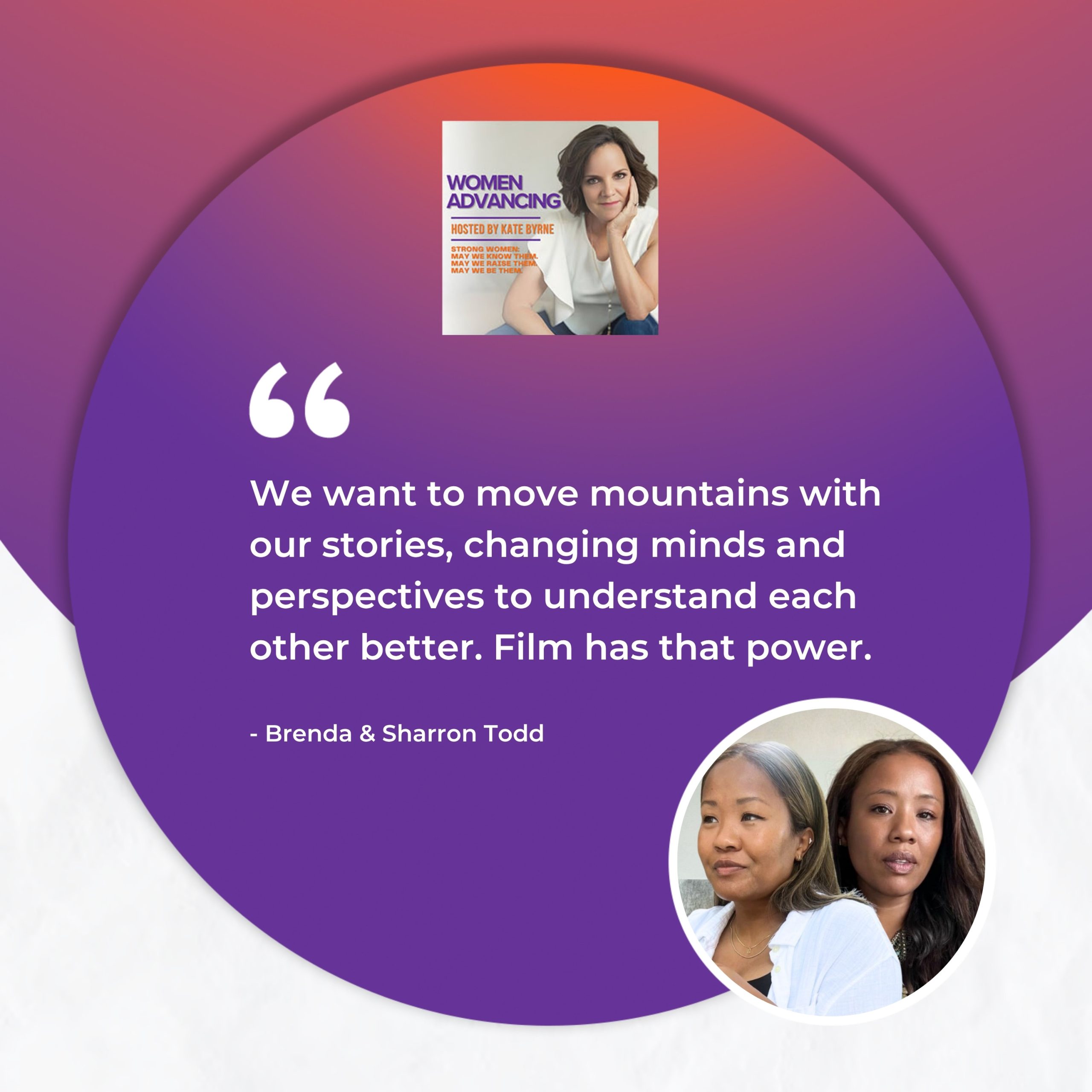
Change perspectives.
A bit closer to understanding each other.
Film has the power to do that. Art, in general, has the power to do that.
It ignites a spark in everyone to care in these days of such massive apathy because of overwhelm and exhaustion.
It’s the accidental meeting of your heroes that aren’t so heroic. That’s what social media does, too. There are a lot of great things from social media, but the negative side of that is, “I thought you were like this. I thought this was like that.” What that does is it takes away the hope that people had. We hope that we are able to reinstill it.
Especially with our mission-driven client films, people are out there, and they’re not letting the world stop them from trying to change the world for the better. They simply aren’t. They’re not taking no for an answer. They’re not taking defunding for an answer. They’re not talking, “You’re not as important anymore,” for an answer. They keep pushing and helping other people who need help. We’ll always be there to tell that story.
It’s one foot in front of the other. You’ve got bigger fish to fry, for sure. What are some of the films people can be on the lookout for? Are you allowed to say that?
Bren, you gave away our big idea. On our side, we have a few fun ones. We have the TV series that we’re working on. We’ve got a series about growing up on Military bases and a lot of fun stuff. We have a short film that we’re working on, and then all of our client films. We’re working with a few nonprofits to help bring some of their missions to life. We wrapped up a documentary that we shot called Dope Girl. We had a private viewing there. Let’s see where it goes after this. We shot it for the client.
I hope you bring it to Charlottesville. That’s all I have to say.
That’ll be in the works. We have a lot of things in the oven. Some of them will come to light in the next couple of months.
That’s awesome.
Wisdom For Younger Selves: Life, Business, And Impermanence
In closing, take a second. Let’s think about this. Knowing what you now know about business, life, and impermanence, what advice would you give your younger selves?
I’ll go first. Off the top of my head, first, the advice I would give is to stop trying to people-please so much. That’s a big one.
It’s a huge one.
“Stop trying to people-please and make sure everyone else is so comfortable that you are uncomfortable all the time. You shrink yourself. Every table that you’ve been at so far, you’ve belonged at.” That would be my note to my younger self.
You do not need people's permission. You aren't going to get it anyway, so you might as well go out. Share on XI can’t follow that. That’s too good.
You mentioned earlier that the whole notion of living your life, not somebody else’s life. In the beginning, that’s what we do. We go and do what we think we’re supposed to do. Then, we wake up one day and realize, “I’ve put myself in this mold, but that’s not me. It doesn’t fit at all. It hurts.” Far too often, we end up having to disentangle, dismantle, or blow up. I was a blow-up person who ripped the Band-Aid off.
It would be so wonderful if we were able to catch that earlier and share when we see younger generations struggling with, “What do I do? What do I don’t do?” Advice I’ve said is like, “Other people don’t have to understand why you’re doing it. You have to understand why you’re doing it. When you do that, the rest will fall into place. If it doesn’t, you’re complete with them on your journey.”
To that point, I would tell my younger self, “Do not wait around for everybody to validate your decisions.”
That’s a huge one.
Not people in your home. Not people outside of it. Not your acquaintances. Not your colleagues. Not your heroes. It’ll never happen. You will not get 100% validation from everyone. Even when you go and do the thing, and you can show that you can do it, people will still project their fears onto you, even if it’s well-meaning.
Let’s have a slight pause to say, not in a sociopathic way, that you don’t care about what other people think of you. There’s a healthy mixture or a healthy balance. Oftentimes, most folks are good. Oftentimes, good folks wait for the validation, and the answer is not to. You do not need people’s permission, especially women. You weren’t going to get it anyway. You’re going to spend your entire existence and your entire career being like, “Let me sit here.”
You try to convince people.
You can make the doggone table, the seat, and the conference room.
Make the whole town. That’s so true. What I’ve shared with my daughters is, “Remember, it’s fine to hear what people have to say, but it’s always going to become colored by someone else’s bias or someone else’s experience,” to your point, Brenda. They don’t have the courage. They don’t have the bravery. They don’t have a sense of humor. They may not have the vision that you do.
When I hear some of the advice, I think, “That’s not at all relevant to me,” which may be me being stubborn, but I’m okay. I’d rather be stubborn. I’ve done some great things. I’ve done some swings and misses, but it’s all got me where I am. Honestly, there are parts I would’ve probably maybe massaged a little bit, but I appreciate all the characters.
For people failing at projects and work stuff, I’m saying it like that on purpose. It’s not a failure in life. It’s not because someone else said you were going to fail, and you didn’t listen to them. There are some things you have to figure out on your own and experience for yourself so that you can say, “Maybe this isn’t where I should live. I should live in another space.” You won’t know it because someone else told you that it wasn’t a good idea. As long as you’re not compromising your morals, it’s very subjective. The decision to do this or that is subjective.
I agree. Thank you to both of you so much. I’m going to see Dope Girl.
Thank you so much for having us and this amazing conversation.
It’s my pleasure. A previous guest used this phrase, and I loved it. It is, “Stop waiting for the permission slip. Life is the permission slip,” which I love. It’s so true. You two are completely living it. Honestly, kudos to you for this incredible story that you are in the process of unfolding for us in real-time. I can’t wait to see the next chapter.
Thank you.
Thank you, Kate. You’re amazing. You know I love you. Thank you so much.
You’re welcome. Thanks.
‐‐‐
Reflections And Inspiration: Lessons From The Journey
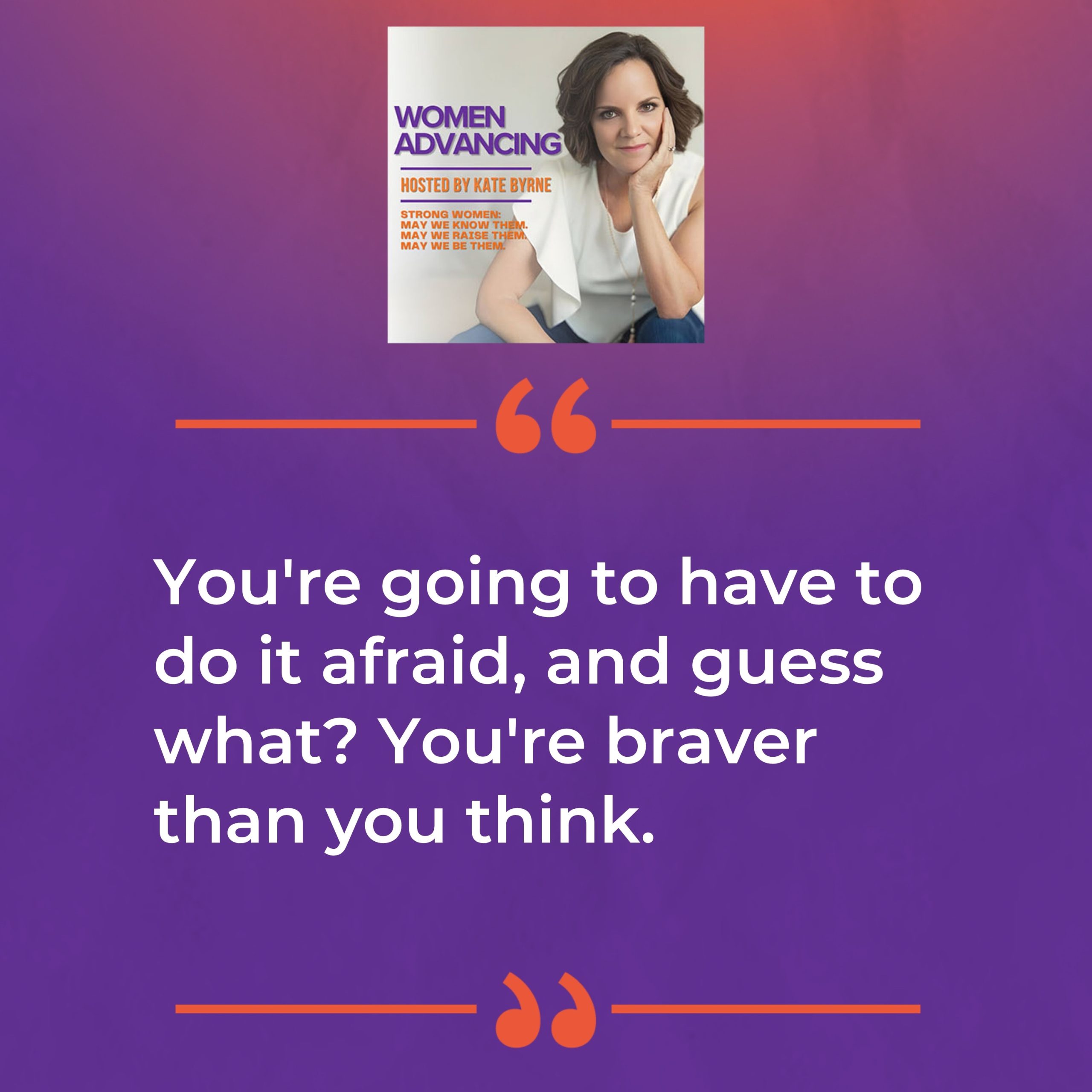
Aren’t they an amazing duo? I cannot imagine working on something so stressful as films with my siblings. The amount of joy that they have is infectious. What a treat. My KB Takeaway is very specific. Why not now? Do not wait for the scary phone call, like Sharron got, to decide, “Life is short. I’m going to do this now. Otherwise, I may not have the opportunity.” That means you’re going to have to do it afraid. Guess what? You’re braver than you think you are, so give it a shot.
Also, I love the piece that every temple you’ve ever sat at, you belonged at. There are going to be others in your future, and there are going to be others that you are going to build. Get that hammer and those nails. Be prepared. Finally, your journey and your life don’t have to look like anybody else’s. It has to ring true to you. This one, to me, is hard. I’m hoping for the younger generations that it’ll get easier.
One of the risks that we fall into is asking everybody for their advice. Advice is helpful. It can be directional. However, it more often has everyone else’s baggage attached to it. Go ahead and do it, but remember that part. At the end of the day, no one knows what stands more resolute than you. Lastly, there are so many skills that you already have that you can transfer into putting to work to do something on that bucket list of yours. Go ahead, be brave, and jump in. Let me know what you think of this episode and who else you’d like to learn from. I look forward to continuing the conversation in the next episode.
Important Links
- Todd Films
- Todd Films on Instagram
- Going The Distance Beyond Burnout: Women Leaders On Centering, Resilience, And Redefining Success With ZaaS Founder Maryam Sharifzadeh And Founder Of The Workplace Psychologist Dr. Candice Balluru
About Sharron Todd
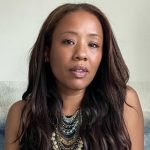 Sharron is a creative leader, writer, and filmmaker passionate about storytelling that drives real-world impact. She co-founded Brooklyn Café & Baking Co. in Helsinki, growing it into a thriving, multi-location brand over the course of a decade.
As a founding partner and head of marketing at Goodlight Capital, a New York–based venture capital firm, she helped launch and grow its mission to back underrepresented founders and democratize the startup ecosystem.
From startups to impact-driven finance, Sharron has built brands, accelerated growth, and led major revenue and fundraising efforts through strategic marketing and brand development. She has also partnered with numerous nonprofits to elevate missions ranging from poverty alleviation to combat veteran support.
Her short film Dear Elijah has been recognized at international film festivals, and she is currently developing new projects that amplify causes that matter. Sharron served as editor and contributing writer of the award-winning photography book No Justice, No Peace (2020), which received the Grafia Ry Design Gold Award.
She also led its media outreach and brand strategy and facilitated its historic archival with the Finnish Museum Authority.
A U.S. Army veteran and world traveler, Sharron has lived on three continents.
About Brenda Todd
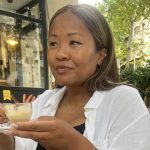 Brenda is an award-winning producer and digital brand strategist with a rich global perspective shaped by her experiences across Europe, Asia, and the United States. Drawing on her background as a founder and close collaborator to startups and nonprofits, she specializes in crafting impactful digital and brand strategies that drive growth and meaningful engagement.
After co-founding and scaling Brooklyn Café & Baking Co. in Helsinki for over a decade, Brenda transitioned her talents to the nonprofit sector, where she helped raise millions in funding through strategic campaigns for mission-driven organizations like Fonkoze, a Haitian microfinance institution dedicated to empowering women.
Brenda has earned recognition as producer and narrator of the award-winning Voices of Hope podcast for Fonkoze, as well as for her role as Best Producer for the short film Dear Elijah, honored at the Toronto Women International Film Festival. Brenda’s expertise lies in connecting purpose-driven brands with their audiences through compelling narratives that inspire meaningful change.