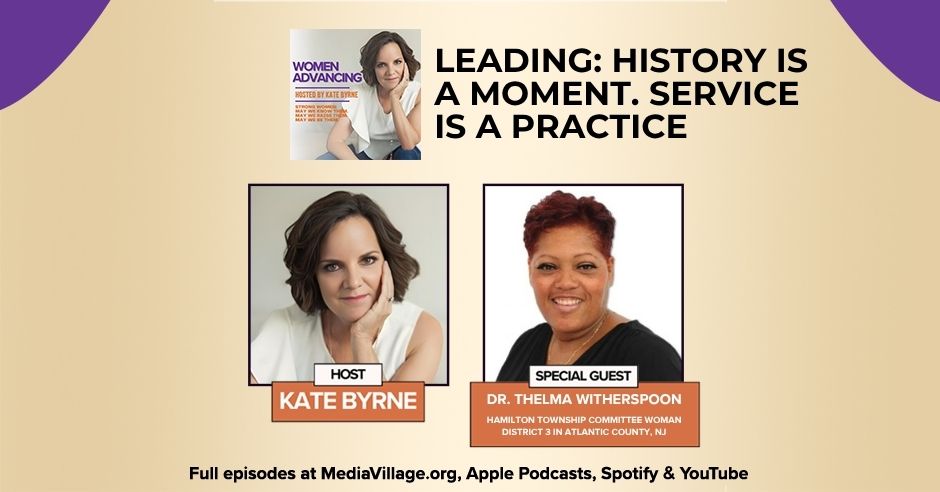
True impact isn’t about making history—it’s about showing up to do the work. In this episode, Dr. Thelma Witherspoon, Hamilton Township Committee woman, shares the grit and grace required for local governance. Drawing from her diverse background in law enforcement, faith, and elected office, she redefines leadership as stewardship. If you’re interested in the nuances of leading or public service, join us for an honest conversation on building influence through integrity, mentoring the next generation, and turning local action into community-wide change. Tune in to discover why solving even one local problem can be the spark that changes everything.
—
Watch the episode here
Listen to the podcast here
History Is A Moment. Service Is A Practice: Dr. Thelma Witherspoon On Leading
Making history is one thing, showing up the next day to do the work is another. That’s right. I got it. Now what do I do? Some of the most important leadership in this country does not happen in Washington. It happens in town halls, school districts, boardrooms, and local communities where decisions directly shape people’s daily lives. On this episode of the show, I’m joined by Dr. Thelma Witherspoon, who’s the Hamilton Township Committee woman for District 3 in Atlantic County, New Jersey. In 2022, she made history as the first African-American woman elected to the Hamilton Township Committee, and she was re-elected this past November.
Now, why would I be having this conversation? As you’ll soon hear, there are so many parallels between leadership in public service and leadership in the private sector. It is not about making history. It is about what happens the day after. Thelma’s career spans law enforcement, education, faith leadership, and elected office. It gives her a rare perspective on service accountability and the real work of governing. I’m going to say it, the real work of leading.
We talk about the power of local leadership, sure, the importance of listening and watching and asking questions, the responsibility of being the first, and how faith and civic life actually intersect, and the relevance of all and what it takes to inspire the next generation of women to step into leadership roles and into public service. If more women saw leadership as stewardship, our communities would surely look different. Join me. Let me hear what you think. Stay to the end. Lots of KB takeaways on this one. Again, the parallels. Enjoy.
Everyone, welcome. Please join me in welcoming Dr. Thelma Witherspoon, who is the Hamilton Township Committee woman. We will be speaking about so many things, a little bit of faith, but really a lot more about power and women using their voice and leveraging their influence and political power. Thelma has done exactly that, especially at the local level. Thelma, welcome to the show.
Thank you. I am so glad to be here.
It is my pleasure. Thank you seriously for making the time. It’s so important these days. Really getting our voices and our thoughts, and, frankly, the issues that really matter to such a broad base of constituents. I want to start a little bit back about how you are making history. You just said, “Fine, I am getting back to work.” What I mean by that is back in 2022, you made history as the first African-American woman elected to the Hamilton Township Committee in Atlantic County. You were reelected this past November, no small feat. I am curious, what does it actually feel like to be a first? How do you balance that symbolic weight with just the everyday, getting-it-done work of governing?
I did not know I was going to be the first. I was not running to be the first. I was running for a seat. It just so happens that after I win the seat, I find out that I am the first African-American woman, but not the first woman. There were about eleven women prior to me who were elected to the Hamilton Township Committee, but I was the first African-American woman. I did not realize that until after I had won. After it all started.
Being The First
What was that like?
I was very honored, you know, that the people had elected me. Also, I felt that I was paving the way for other women to come after me, that they would not think that it was impossible, and that it could not be done.
It reminds me of way back when Carly Fiorina was the first female CEO of then Hewlett-Packard. I can remember reading her quote where she said, “I look forward to the day when it is not stated that I am a woman CEO.” I would think that would be true for racial, for love preferences, all sorts of things like that, where it just is not even a part of the descriptor. It is the best person who won, the most, you know, accomplished and capable candidate.
The residents spoke. It was not based on any unrest, DEI, or anything like that. It was the residents and the voters who decided who they wanted to represent them.
What I want to ask is there are so many younger people who are not active in voting. How can we get them engaged?
We have to bridge the gap.
Say more about that.
Bridging The Gap With Younger Generations
I really believe that sometimes we take things for granted. We assume that the experiences that we have, the younger generation knows and understands. They do not because a lot of times we have shielded them. We protected them from certain things. They may not know the sacrifices or what you had to go through to get to where you are. I find that we have to do a better job in bridging the gap and not assuming that they know, but showing them the way and showing them maybe what we have gone through testimonial-wise. Let them see it.
We often take our experiences for granted, assuming the next generation understands them. They don't—because we've spent so much time shielding them. Share on XEverybody gets a little bit. There is a lot of apathy. It is like somebody says it, and then it is not going to matter anyway. We are just going to get more of the same. This leads me to really think about the power of local versus national. Much is paid, especially nowadays, to national politics, but real change often happens really closer to home. What do people misunderstand about that? The power and responsibility of the local office?
The Power Of Local Governance
We do not really understand because they’re looking from a national perspective. They see the national issues, not realizing that all politics start local, and that you have your everyday person who may have an issue that needs to be resolved. It is not resolved from a national issue, from a national level, because they may not know that person. It has been resolved as a local issue. If someone is concerned about a pothole, or they’re concerned about a tree that has fallen, or salt that is knocked down, or roads that need to be paved.
They’re not going to call their congressperson for that. They’re to call the local person in order to get those issues done. Sometimes we may not really understand the power of the local person who is representing you, the power that we have, or the power that they may not know that we have. We have to tell our story. I believe in telling my own story. Do not wait for anyone to tell my story. I tell my own story through social media, anywhere I can, so that people are totally aware of what’s going on in the community that I serve.
Share a little bit about your story that got you up to where you are now.
It started when I was in junior high school. I saw Shirley Chisholm as the first African-American woman Congresswoman in New York. She even ran for president. She was not successful, but she ran. I was very intrigued by that. Not knowing that I would later be involved in politics, the seed was planted in my mind concerning politics. I started very young, working on every level of the political aspect, such as knocking on doors. I was given an opportunity by the late Mayor Michael Matthew. They told me they were going to pay me $75 and give me lunch. I thought that was fantastic.
Food and Doremi.
Forty years ago, that was great. That was my first experience knocking on doors. Giving information out of about 20 or 21, knocking on doors, and putting the literature out. People do not believe in that old-fashioned way of door knocking, but it does work. People want to see the candidate or know something about the candidate.
Especially this day of AI and all the things, everything is so technological, and everyone is busy looking at a screen, it is nice to see a live face, a three-dimensional being as opposed to the other.
There has to be a balance because a lot of people are on their phones, and they do not have time or they do not want to. After COVID, people did not want to open the door or knock on the door. There has to be a balance because you have that older generation who wants to knock on the door, but you have the younger generation who wants to look you up on social media. They want to see you before they decide. There has to be a balance. I really believe that. That is how I started. I met another elderly gentleman who is deceased, Mr. Joe Brown.
He said, “Maybe you want to work for the board of elections.” I said, “Yes, that was good. That’s great.” It was a different level. I started with the board of elections when people would come to vote. I knew that aspect. I did that for ten years. One day, I ran for office for the Atlantic City Board of Education. I was 39. I ran with a Jewish grandmother who just passed away last year, Rochelle Salway, and she was the grandmother, and I was the mother. She was running for our grandchildren, and I was running for my daughter.
We figured that, I said, “If I run for the Board of Education, I will not only help my child. I will help everybody else, too.” That was my thought process. Someone said that to me because we were having some issues in Atlantic City, putting the younger children in middle school. A lot of people were against that and put them in an old high school. I just said, “I’ll just put my daughter in private school.” Someone said, “That’s good that you can do that, Thelma, but what about everybody else?” At the time, I did not want to say I did not care, but it was like, “That’s not my problem.”
Later on, my daughter said that she did not want to go to an all-girls high school. She wanted to go to Atlantic City High School. I said, “I know what I’m going to do.” On top of the fact that I had just gone through a divorce, I did not have the money to keep her in private school. I said, “I know what I’m going to do. I’m going to get involved with the school because I did not want people to think that I was not concerned about my child.” I became a part of the parent action council. I became the parent action president. What I learned, you cannot make decisions on that level.
You have to be in the game to play the game. You have to be elected. I will go to the meetings and tell them what the parents were saying, but it is not that they did not listen to me. Change really was not going to come unless I was elected to that position. We ran in 1999, and we won. No one expected us to win. Of course, I was running. I did not expect to lose, but I did not expect to win either. I did not know what to expect. Once we won, I was like, “What do I do?” I was so engrossed in running for the seat.
Teamwork makes the dream work, and no one can do this work alone. Share on XI get that. It is like, “I got it. Now what?”
The New Jersey school boards association they do a lot of education. I took advantage of that. I had to learn how to become a board member and what my responsibilities were. I was willing to do that because I wanted to, I was so proud that the people elected me, that I wanted to do a great job.
I would think that’d be so humbling.
It was very humbling. I was honored. I became a master school board member in three years. I took a lot of courses to learn about budgets, to learn about different things that you cannot run the school board like a business. It is a business, but it is a separate entity, and they have their own rules. What might apply to the private sector may not apply to the government end. You have to know that. I enjoyed that.
I would think exactly what you just said is so true. Often, when someone has experience in one area or one sector, they think they can pick it up and then plug and play some aspects, maybe, but there’s such a nuance. You have to really understand. One of the ways you do as your point is you have a little humility, and so then you go learn with nothing wrong thoughts. You ask questions, and you probably did a lot of, I was going to say observing and listening as well, figuring out the system that was playing out in front of you, right?
Correct because the infrastructure is already in place. There may be different players, but the infrastructure is always there.
How were you, how were you received since you were new to the game, and you were willing to play the game? Were people willing to help teach you how to play this particular game?
No. I had to learn on my own. Now you always have somebody. When I started networking with other school board members across the state, I had someone whom I could call. You could also call the New Jersey School Boards Association if you had a question, and they were very open and willing to lead you in the right direction on what you needed to do. I was willing to make those steps. I was not too proud. I did not act like that. I knew everything because I did not, but I wanted to be the best that I could be.
I would think that in your earlier point, everybody was counting on you. They all voted for you. You could either be proud and not ask for help and potentially fail because you had never done it before, or admitted and said, “I’ve got a lot riding on this. This is bigger than just me. I want to figure how this is all done,” which is something that so many people encounter when they’re just also in the workplace and they’re stepping up to a new level within a company hierarchy, if you will.
You have to understand that it takes a team. Teamwork makes a dream work. I used to be that way. I think everybody has done some essay at some time. Teamwork makes a dream work, and you cannot do this work alone. When I first ran, you know, you have your platform. “I’m going to do this, and I’m going to do that, and I’m going to do this.” When you get in, you find out you cannot do that at all. That is not the way that this is done.
How? You contend with that, because to your point, you went out, you’re very public, very vulnerable right there, and making promises or statements. All of a sudden, you discover, “The whole system is against me. I cannot do any of these things.” How do you counter that while maintaining your own who you are, your own integrity?
Being honest?
Yes.
Importance Of Due Diligence And Preparation
Showing your vulnerability and showing that you are willing to learn that you’re not the big know-it-all. People who were there before you are going to be there even after you leave. You have to rely on the expertise of others who are already there. On top of the fact that you have to do your homework. I remember one time in particular when I first got elected, they used to give you stacks of an agenda with packets, and like the day before the meeting, the day before. I did change that. You couldn’t read all of that in 24 hours.
I had made a decision, and I really do not even remember the decision, but I know I had made one, and it came up six months later, and I said, “Why are we doing that?” They said, “You voted for it.” That was a learning lesson moment. Anything that I put my name on or vote for, I have thoroughly investigated. I’ve read the material. I’ve done my due diligence. I’ve asked questions. I’ve done all of that, but it was a learning experience for me. It was one that never had to be repeated. Even being in office now, people say, “Do you actually read every piece of paper?” I said, “I do.”
I can only imagine that would be one time. You’ve had this lifetime of public service because I know you’ve served in law enforcement and education. Faith leadership, which I want to get into a little bit in a little bit later, and now, elected office. I was moving across these systems. Did it help shape your understanding of leadership authority and accountability? Was it different in each of those places, where some common threads came from your pillars of who you are as a leader?
Actually, it started with my parents. My father and mother were pastors and started a church. I tell people that if you work in church, it may not be, but some churches do have schools, and the church itself may not be a school, yet it is. You learn public speaking, you learn how to work with people, you learn how to resolve issues. There are things that you have to learn. You have to stand up and recite the 23rd song, right before Easter or resurrection Sunday, and you have to learn the books of the Bible.
You have to stand up before the congregation and say it. All of that becomes a part of who you are. I watched my parents, Bishop Luke Witherspoon and Juanita Witherspoon, serve the community. My father and mother were from North Carolina. My father grew up in an orphanage. His father died when he was eleven years old. When he became a man and got called into ministry, he was able to be a father to many. He and my mother were fathers.
My mother was like a parent to many young people. We had a lot of young people. I learned leadership from my father and my mother. He would give me a job to do, and he did not like excuses. I’m like that today, and we would say, “I cannot do it.” he would say, “Make it work.” My leadership started at that point. As you go into various different parts of life, working with the school board, working on your job with the public, I was not a police officer, but I worked with the police department in grants and budgeting. Before that, I worked in revenue and finance, and I worked for the city for 35 years.
That’s such an important area too to really understand how a city works, spends, and allocates its funds, or not. Oftentimes, probably more or not part. It’s funny, my husband and I often talk about this. It’s paying attention to what’s said, but also maybe even paying extra attention to what’s not said. Finance is like that, too.
On the school board at the time that we were elected, Rochelle and I had a budget of $200 million and $100 million in capital projects. It’s the second largest budget in a municipality is the school. People do not realize that.
No, they do not.
Especially if your kids are out of school or you don’t have any grandkids in school, or you’re not thinking about that, because you’ve already done that. You’re not thinking about the school tax and things of that nature. Most of the time, it’s the second-largest budget in the municipality. I had a lot to learn, and I learned a lot, which I believe is helping me today in my role as a committee woman. We had negotiations, but I was very familiar with the budget and with negotiations. I was a teamster.
I was also a teamster 331 and shop steward, and all of that when I worked for the city. You learn how to negotiate from a regular employee. When I became an elected official, a school board member, I now have to learn how to negotiate from an administrative side. It is a lot. Now you are trying to make sure that the employee is well taken care of, but at the same time, save money in the budget. Not overdo it, not overexpend, but yet be fair. It is a lot, but it was a very good learning experience for me.
Anytime you have a chance to work with the numbers of an organization. Often, I think, especially as women, some are more nervous. Hopefully, that’s starting to really change a bit. For the most part, there are a lot of assumptions being made by those who are higher up at the same time. Anytime I’ve said, you get those numbers, learn how to do those, work with those, figure them out. That is such a key arrow in your quill. You can walk into any room, and frankly, you demonstrate knowledge of that instant credibility. Leaves my experience.
Sometimes, as women, you think that you cannot do it. When you get into any position, you have to learn it. If you’re willing to put the effort in and to learn whatever you need to, you’ll be fine.
Ask the questions. To me, it’s always just, if I can just get over myself for two hot seconds and then move on, so I can actually get the job done, then get out of my own way. I’ve got a question for you. Pastor and public servant. You’ve got political leadership and then moral leadership. Sadly, in this day and age, there are a lot who would say, never the twain shall meet. One cannot have the other. It’s an either-or thing, which is really sad. I understand why folks feel this way, but how does your faith inform how you show up in civic spaces? Not everyone believes in something, sadly. You want to be true to yourself, but also leave room for others to feel comfortable and not feel alienated. How do you balance that or juggle that?
Integrating Faith And Integrity In Civic Roles
My faith, when I’m working in a political or in the marketplace, let me call it the marketplace, anything outside of my religious belief. I’m working in the marketplace for the job that I’ve been elected to do. My faith shows up in my integrity, in my character, in my honesty, without me trying to prosper like people to believe the way I believe. I believe that my light should shine and that people may ask me a question.
I was once running for a commissioner seat in the third district, and I was so excited about my faith, and I listed a lot of my accomplishments. That offended people. Some people were atheists. I did not know that. They asked me to denounce my religion. If I did, they would vote for me. I said, “I will never do that.” They did not vote for me. Subsequently, they ran a green party person against me that they knew could not win. I lost that election, but I stood true to what I believed. I believe that your faith shows up. It was a lesson too.
I was just going to say what a fascinating test of alignment.
It was a lesson that I do not have to push my faith in order for people to know that I’m a great person. They can see that by the way that I operate, the way that I present myself, and the way that I do things. Now, if I’m asked, I do not deny, but it’s not something that I put out in the forefront as I did in 2017.
I don't have to push my faith for people to see my character. My actions speak for themselves. Share on XIt just does not have to be a thing.
It’s in my bio that I’m a pastor, and I wasn’t pastored in 2017.
Excited believer.
I was saying, “All of my degrees are in biblical theology, and I have a doctorate of divinity, an honorary doctorate of divinity, and I got a master’s in biblical theology.” I was very excited because it was an accomplishment, but it was not received that way because then they started, “You do not believe in this, and you do not believe in that.” They were using my faith. It was not even my platform. I did not even have it as a part of my platform.
They were picking out things that they felt Christians did not believe in. They would attack me with certain things. I learned that that was not actually necessary for me to do. I still am true to what I believe. You have to respect, and I was taught to respect other people, even if I do not believe the way they believe. It’s easy for me to work with someone of a different faith. I respect you and what you believe, but I expect you to respect what I believe as well.
In the end, what we’re both actually going for and working on is this, not this. It’s such a level. We’ve got to get out of our own way. That’s so true. One of the things that I respect so much about you is that you remember where you came from, but second really is your willingness and ability to help others with great intention and encourage other women to really get in the game. People like Tracy Thompson for the office. In your mind, what do women need most when they’re on that edge of stepping into leadership, like Tracy is, but not get convinced they belong there? What do they need?
Confidence.
How can we shore them up?
Encouraging And Mentoring The Next Generation Of Women
We have to mentor people. It’s not enough to put a person in a position. You have to mentor and then hold people need to hold us accountable. A lot of times, you vote for someone and put them in office, and then you leave them. You never write a letter. You never call them. You never go to a town hall meeting or anything. Never go to a council meeting or a township meeting. You do not even watch it on video. You have to hold people accountable when you elect them.
I encouraged people to run, which I encouraged Tracy to run because I knew her for many years. She was a boots-on-the-ground woman. She knew how to knock on doors and all of this, but this was another level. I saw something in her. I was like, “I believe that you can run for this office.” She was not true, but I did not leave her. Did not just say she can run for the office and no, bye.
I’m still working with her to a certain extent. Once you get elected, there are certain responsibilities that you have to do, also, because people cannot do everything for you. You have to read your material, you have to do your own work, but I’m still there, and I’m available. If she needs a question, if she has a question, I’m there, and I’m available for it.
I know a lot of your work for 2026 as Hamilton Township Committee Woman, although you are so many women in one woman. What are some of your priorities for 2026?
Number one is working collaboratively with the entire committee. Me, me, me, me is not a way to get anything done. When people elect you, I believe, when people elect you or see someone, they want to see things go forward in their township or their city. If you’re confrontational, you’re always argumentative, and you’re not really getting anything done. I also tell people that there are a lot of things that are going on on the national level.
Not that it does not trickle down to the locals, but people are not concerned about certain things. They want to know what you are doing in the township? Their issue is that you have to be in tune with the issues of your constituents. I do know what’s going on nationally, and I can talk nationally about what’s going on. I can have some dialogue, but that may not affect my township and the constituents where I’m at. They have other issues that they’re concerned about, and I need to make sure that I’m addressing those issues that are important to them.
The job at hand is local. That’s what you’re elected for. You weren’t all the other things. I think the truth is that this, too, is like anything. I think what’s well, especially in this day and age when everything seems so incredibly overwhelming, if we were able to just focus on the issue at hand, know that there’s not going to be a complete disregard for the larger issues. If we all took care of what we could right here, right now, this part, and then that would lead you to the next part. That will lead you to the next part. You’ll end up colliding with folks who can help you really eventually achieve the larger piece, it seems to me. It’s hard for people to do that.
In Hamilton Township, we have a dam that has just been completed. The dam had been broken for 50 years.
It took that long.
I was a teenager. I wasn’t in the township when the ball got rolling, but when I was elected, I was a part of the decision-making and voting. Congressman Van Drew was contacted, and he got a grant and got several million dollars to help. It is because of the cost of the dam that needs to be fixed. A lot of people may not understand the importance of the dam being fixed, or may not care about the dam, but they elected me. I’m one of the people who was elected. I knew the importance of the dam, that if the dam had broken, we could have had a Katrina.
Thank God we did not. Thank God it’s fixed. I was a part of it. I was not the only person. It took a collaboration, of course, state, county, and our local officials, but I was a part of it. I knew the importance of that and my vote for whatever that we needed to do. I made sure my vote was cast to make sure that the dam was completed, and in the end, it would benefit everyone, even people who did not even know about it or care about it.
That’s the pit too, it’s in your position and spot, part of the role that people do not really talk about, but I think it is quite evident, especially with what you just shared. Part of the role is being the translator of explaining, and that almost takes us full circle to earlier questions, like how do we get more young people involved? As a translator, I’m explaining why this issue matters, how this may seem not to touch you, but it does. Here’s how to elevate and educate everybody, as well as how this all really impacts one another.
We have to do a better job and tell our story. Tell the story, and I make sure that I have resources that are on my social media that people can take advantage of that they may not know of. We have to tell the story. I do not wait for anyone to tell my story. I tell my own story. When other people come along, it just enhances what I’ve already been doing.
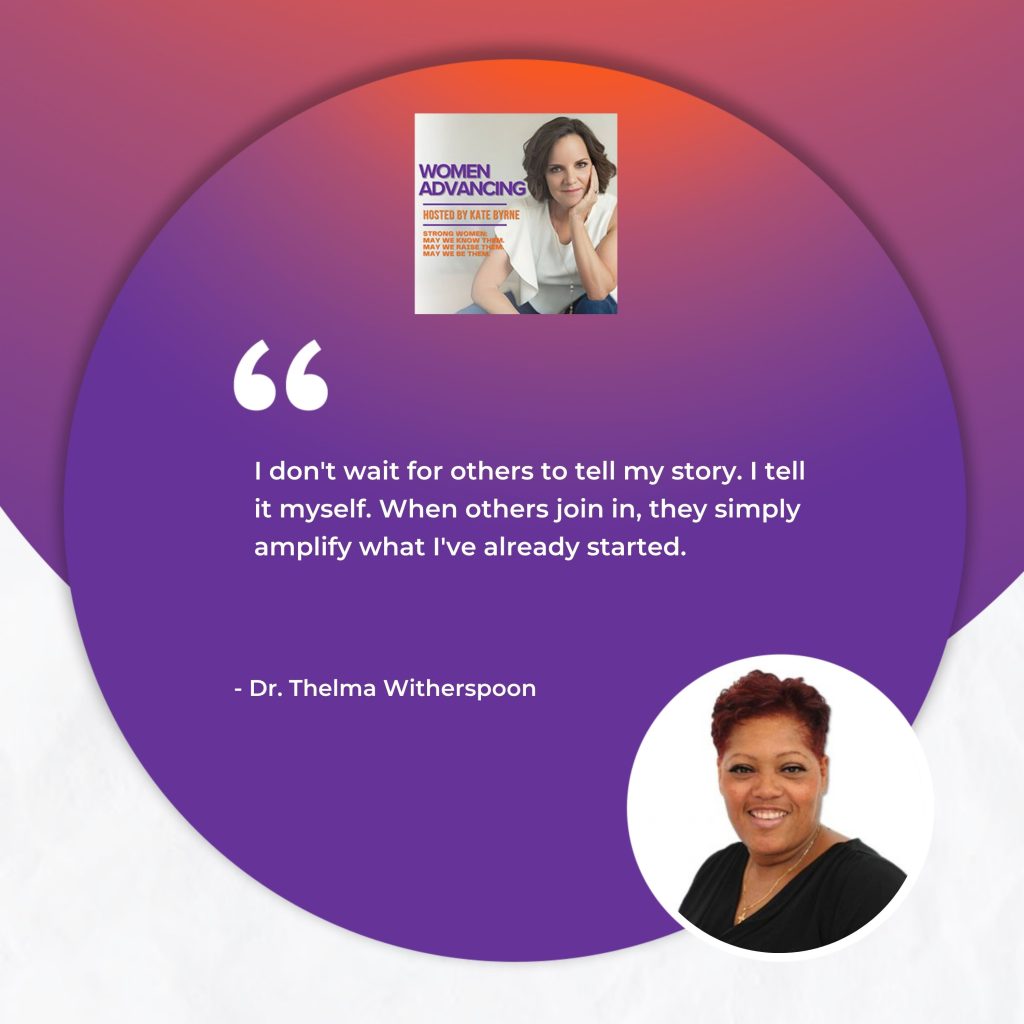
I was going to tell your narrative. That’s really true because when everybody else comes to your point, it just shores up everything you said. It’s like, “See, I said that, I showed you.” In your mind, what do you think would change in communities if more women got involved in public service and they took it really as stewardship?
Men and women, there was a book, or like Venus and Mars.
Yes, that’s right.
We’re totally different, and we bring a different perspective. Women’s stewardship, where a male or a man may think one way, we may think another way. If you put them both together, maybe you can resolve an issue. It’s for the good of the whole. Women running and positioning are very important because of the perspective that we bring to the table. I’m not a male basher. I tell people this because I have a father, I have brothers, I have grandsons.
I believe in uplifting everyone, and people in their particular roles. At the same time, I’m not going to dim down my light to make you feel who you should be. You have to feel that way about yourself. It’s knowing who you are. That helps make the difference. You know what I wanted to add to you was talking about how we were earlier, and how we bring younger people in?
Yes.
We have to accept some of the younger people’s ideas. We have to listen. We have to listen to what they say and not be threatened. It is called the young in the Bible who said he called the young because they’re strong, but he called the old because they know the way. Merging the two and balancing the two will help bring some of the younger people in because if they’re on social media and you’re still not on Facebook, which they say that’s the older people, that’s for older people now. Most of the young people are on Instagram or something else, TikTok, yes. You have to be able to meet them where they are and give them that guidance, give them the ability to be able to grow and teach us something.
That’s the thing. Be willing to be curious. You’re a lifetime learner. You stand a greater chance of frankly being relevant for life. You’re always going to have something that’s informed when you make a comment, or you’ll just understand really what’s going on and have a better sense of things. I totally agree. With that, what advice would you give your younger self knowing what you know now?
Reflecting On Personal Growth And Wisdom
The advice that I would give myself is not to be a hothead.
I laughed because that’s a little something I deal with myself. My dad used to use that very phrase and say, “Simmer down, sis.”
Simmer down, and you can be right and wrong at the same time. You can be right in what you’re saying, but wrong in your delivery. Having wisdom, you get a little more wisdom as you get older. Sometimes you have to listen first. Everything does not deserve a comment. Everything does not. You do not always have to have all of the answers to everything, and knowing that and knowing yourself. That’s the advice that I would give my younger self. To listen more.
It’s so important in all of the realms within which you find yourself, but especially in this day and age, really important. Thelma, thank you so much. All the generosity of wisdom and for just your spirit and all the stewardship that you have across all the different sectors and worlds that you interact with. Seriously, it’s an inspiration to everybody, and it shows you really can. We all have something to contribute. Let’s get going, right?
Yes. One of my professors in Bible college, Dr. Sharon Stone, used to say that we were all born to solve at least one problem in the world. There is a purpose for all of us, and we just have to find what our purpose is and work towards our purpose. I’m going to end with you have to love what you do. If you love what you do, it’s not a job, it’s not work. It’s fun.
I believe when you are in that state, when you are in that flow, you are at just such a higher level, just energetically. There’s bliss. You’re better able to handle unexpected things that come your way. I do not know, you’re more fulfilled. I also think you realize that this, too, shall pass. Something else will be coming my way. I’m going to end on that note, too, my friend. Thelma, thank you for coming to the show.
Thank you for having me. I’m very honored that you considered me to be a guest. I want to thank Diane for recommending me to you and for us meeting a month or so ago and getting to know each other. I look forward to working with you in the future and collaborating or something.
Deal. Until our paths cross again.
Bye-bye.
—
Many KB takeaways from Thelma, and I’m going to speak quickly through them, but they’re all very deserving. First and foremost, you have to play the game to win the game. A person with whom I worked once said, “Katie, you’ve got to swim with the alligators without becoming one. Truer words, it does not mean you sell your soul. In fact, by not selling your soul and being good at the game, you will garner extraordinary influence, and then you can shift the game to how it can be much more equitable and accessible to all.”
Second, anything you put your name on, read it. Do not check it off the list. Pay attention in this litigious realm and the days in which we are living. Do not mess around with that. I will just not mess around with that. Pay attention. You do not have to dim your light. You know that I say that all the time. If someone’s threatened by it, it’s on them, not on you. You have every reason to shine, and frankly, you’re demonstrating they can shine too. There’s room for both of you.
Personal Kate Byrne message to yourself. Do not be a hothead. You can have opinions, but be open-minded and frankly intellectually curious. By doing so, you will remain relevant for the rest of your life. There’s a right way. You can be both right and wrong. You may be right in what you’re saying, but wrong with the tone with which you are saying things. Slow your roll and think about how you’re sounding and how people are receiving the message you have. How’s it landing?
They’ll show you. Everything does not deserve a comment. Make sure when you’re about to say something, you’re saying something that’s additive. Are you saying something simply because you want to kind of show that you know everything? If that’s the case, please do not say it because that will demonstrate quite the opposite, that in fact so very little. Finally, Thelma told us what her teacher had said, and that was that all of us were put on this planet to solve at least one problem. I’m going to challenge you and ask, “What’s yours?” Thanks so much. I look forward to the next time we continue this conversation on the show.
Important Links
About Dr. Thelma Witherspoon
 Dr. Thelma Witherspoon, is a native of Atlantic City, New Jersey and currently resides in Mays Landing, NJ.
Dr. Witherspoon retired from the City of Atlantic City and the Atlantic City Police Department after 35 years of service.
Dr. Witherspoon was a former Vice-President and then President of the Atlantic City Board of Education for 2 years. During her tenure and under her leadership, along with the Board Members, ground was broken for two new elementary schools: New York Avenue School and Sovereign Avenue School. Also under her leadership renovations were started for the Uptown Complex, Chelsea Heights, and Martin Luther King Schools.
Dr. Witherspoon served as the former 2nd Vice President of the Atlantic City Chapter of the NAACP. In 2018, she was elected as Atlantic County Committee Person-At-Large of Hamilton Township, NJ and was also the Atlantic County Faith Based Coordinator for Hillary Clinton’s Presidential Campaign. Dr. Witherspoon is a former member of the Historical preservation commission for Hamilton Township, NJ. In June of 2022, Dr. Witherspoon was elected as the Vice-Chair of the Atlantic County Democratic Party.
She is the Pastor of the Westminister Christian Worship Center in Atlantic City, NJ and a member of the Fellowship of Churches of Atlantic City and Vicinity.
Dr. Thelma is a graduate of Jameson Bible School and the International Christian University earning a BA and MA in Biblical Theology. She received her Doctor of Divinity by CICA International University.
Dr. Thelma Witherspoon, graduated from LEAD Act in 2016 and was an honoree for the Atlantic City Hometown Heroes in 2017 and also an honoree for the 2022 New Jersey State Governor’s Jefferson Award.
Dr. Thelma Witherspoon is also a radio host on two-time Stella Award WEHA Gospel 88.7 and 100.3 FM every Saturday morning from 9:00 AM to 10:00 AM, “In The Community with Dr. Thelma Witherspoon”.