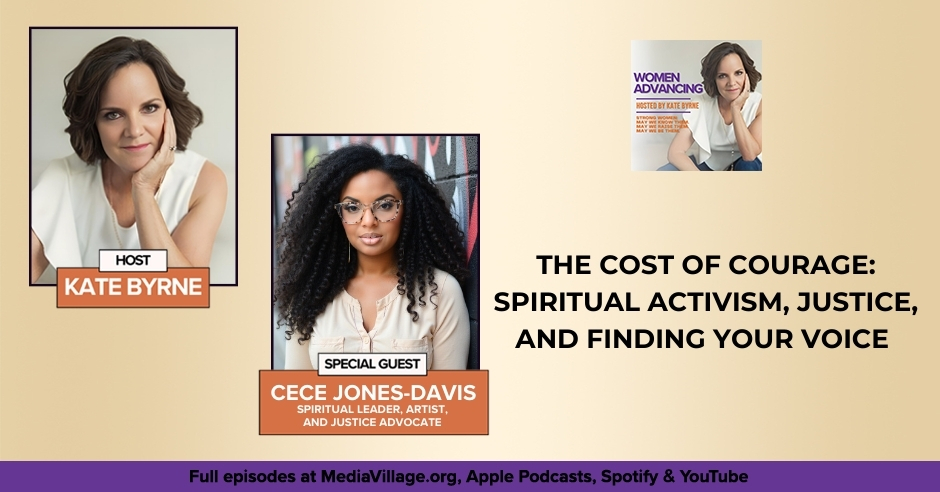
What is the true cost of courage in speaking up? In a world riddled with resistant systems and uncomfortable truths, Cece Jones-Davis, an extraordinary spiritual leader, artist, and relentless advocate for justice, has consistently chosen voice over silence. Known for her tireless work on the Justice for Julius Jones campaign—a movement that successfully fought against a man’s execution—Cece steps into spaces many of us avoid, armed with both courage and deep compassion.
Join us as we explore the journey of a leader who wrestled with her faith, stood firm against political backlash, and discovered that her greatest passions were often fueled by the things she hated. This conversation is an unfiltered look at what it takes to speak truth to power, how spiritual conviction sustains leadership, and the profound, life-altering difference one woman’s voice can make. Read on to uncover the powerful lessons on why, for the sake of justice and your own well-being, the moment for silence is no longer an option.
—
Watch the episode here
Listen to the podcast here
The Cost Of Courage: Spiritual Activism, Justice, And Finding Your Voice With Cece Jones-Davis
In this episode, we’re taking a slight little shift, but it’s a really important conversation because I’ve been doing a lot of thinking lately about things we’re taught not to talk about. One of the things that I believe the Women Advancing platform does is it gives a voice to people who are working on amazing projects. Some of these amazing projects include speaking up when they see real change needing to take place.
It could be in the form of justice, race, or power, because there’s a tremendous cost of silence. My guest, Cece Jones-Davis, is exactly one of those voices. She’s an extraordinary Spiritual Leader, Artist, and a relentless advocate for justice. She spent time working with the Obamas, and she’s more recently known for the work she did on the Justice for Julius campaign with Viola Davis, fighting against and getting a stay of execution for Julius Jones. We’ll get into that a little bit later.
Cece has stepped into so many spaces that many of us would rather avoid and brought both courage and compassion with her. Our conversation explores the moment of silence when that moment of silence was no longer an option. What it takes to speak truth inside of resistant systems, how one’s faith can sustain leadership both professionally and personally, and what courage costs and what it gives back. Ours is a conversation about voice and conviction and what becomes possible when women speak the unspoken. Read on and be sure to read to the end for my KB Takeaways. This is a powerful episode, do not miss it. Thanks.
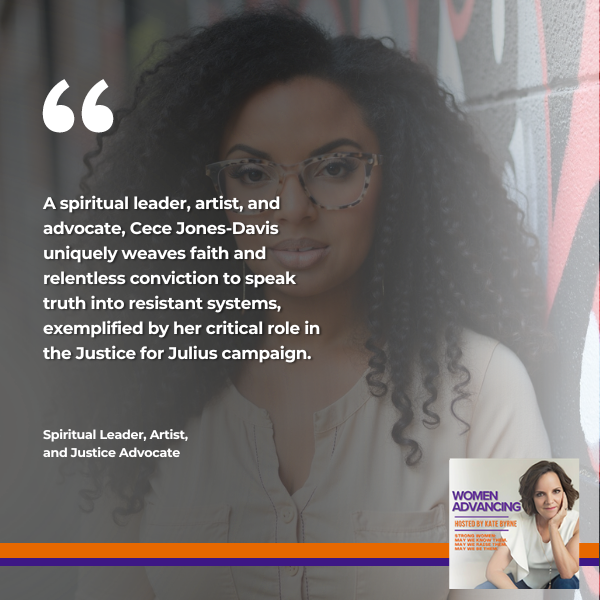
We’re really in for a treat. I always think it’s so funny, timing is such a magical thing and this episode is really proof of that. We’re fortunate to be joined by Cece Jones-Davis who is a Spiritual Leader, an Activist, and an Artist. She weaves all of her gifts and talents, frankly, to give voice to the unspoken. We’re going to talk with Cece about leadership courage and justice because she’s done some amazing programs in each. Cece, welcome to the show.
Kate, thank you so much for having me. I’m so happy to be here. Thanks for the invite.
You honor me by being here. Cece, before we jump right into all the work that you’ve done, which is amazing, share with everyone a little bit of your background and how you got to where you are now.
Yeah, absolutely. I’m from a really small town. I had a good old Christian Southern raising. I went to Howard for undergrad, which was a very formative time in my life in terms of understanding myself better, my people better, culturally and historically. There was such a pride in being in such a beautiful, positive environment with so many beautiful Black people. My time at Howard really informed my journey a lot.
I went to Yale Divinity School because I felt a call to ministry. That was also really formative in so many ways. Jumping from a historically Black university to a PWI, a predominantly White institution, is quite the culture shock. I had that culture shock, which was good for me. It was a really rigorous theological education where my faith was dropped at the door and scattered all over the floor. My three years of Divinity School were about piecing those, that faith back together the best I could.
Some pieces didn’t work anymore. That was really formative. I got into activism. I really felt that my ministry didn’t necessarily fit totally within the confines of the church walls. I wasn’t looking to be a pastor or anything, but my ministry has evolved from then to very much working at the intersections of faith and social justice. That’s what I have done for the last twenty-some years around all kinds of social justice issues, things that mean a lot to me.
I come from a very strong lineage of women—Black women in the South who, in very harsh circumstances, found a way to use their voices for what was right. Share on XYou did a stint with the Obama administration, yeah?
I did. I was very honored to be a part of the Obama administration. It was so special because so many of us didn’t even think that that was possible, to have the first Black president in our lifetime. I would have done anything within the Obama administration. I would have mopped the floor. I would have done anything. I ended up working at the United States Trade Representative’s Office under Obama’s cabinet member Ambassador Ron Kirk, who was actually, by the way, the first Black mayor of Dallas, Texas.
A tremendous experience. I learned so much from Ambassador Kirk, but also just being a part of that administration. I’ll just say that going from that to what I’m seeing now in the federal government is quite the leap. I know that your audience will be folks from across the political spectrum, but Lord have mercy, as a person who’s been on the inside of it, it’s quite the leap.
Yeah, and it didn’t take that long when you think about it.
It didn’t take long at all, and it’s very distressing.
I’m going to just dive in because as we were just getting ready and setting up, we were talking about how everyone knows times are crazy. I want to talk though because you keep coming up to and facing, and I want to hear when it happened, this moment of courage because you’ve stepped into conversations so many people are afraid to touch, especially around justice, race, the death penalty, and I’m even going to say spirituality. Was there a moment when you realized you just couldn’t be silent any longer and it wasn’t an option?
Cece’s Family Lineage And Early Formation In Activism
I can’t tell you that there was a moment and I think it’s because it to such a degree it comes so naturally for me. I come from a very strong lineage of women, Black women in the South who, in very harsh circumstances, found a way to use their voices for what was right. That was demonstrated through my grandmother and I watched that. That was demonstrated through my mother over and over again.
Even as a little kid, I grew up with of course my twin sister, Lela, she would always tell us, “Stand up.” We were little kids and if we came home complaining about something at school or something that we just didn’t think was right. She would say, “It’s not right? Well then stand up.” I was really blessed to be formed by women who embodied having a robust voice and using their voices in such responsible and sacred ways.
I love that addition of sacred because that really is the work in so many ways. I know by doing this, did they cost you anything or did it change things? How did this impact life as it? A lot of times, as I have experienced and also seen, so many people are hesitate to really stand up and say something. Either they don’t want to ruffle feathers or they don’t really want their lives to feel the ripples of what is only natural for things to change.
The Cost Of Advocacy And First Steps
When folks ask me that, I always say that there’s always a cost to doing what’s right. For me, early on in my spiritual journey, I decided that I wanted to follow in the way of Jesus. His words always rang out to me about counting the cost. To do what’s right, to be who you believe you need to be, to embody the nature and the heart of Christ, everybody’s not going to understand, everybody’s not going to like you or love you.
We come to a place I think in spiritual maturity where we understand after having some bumps and bruises along the way, having our feelings hurt, being disappointed, all these kinds of things, that we come to a place where we know we have to choose. If you’re choosing what you believe is right then you have to for the rest of it that you can’t control, you have to be okay with letting the chips fall where they may. I’ve had to do that several times in my life.
Courage, I don’t believe that’s born in us. I think that courage is something that’s exercised in us and strengthened one action, one event, one moment at a time. I remember when I was in Divinity school, I had such a burden for folks at the time. This was early 2000s. The nation was still grappling and it’s still grappling a lot with the HIV AIDS epidemic. I decided that I wanted to figure out how to get close to that issue because a I just had a desire to know more, to help.
I started to volunteer at a hospice called Lee Way Hospice and it’s one of the oldest AIDS hospices in the country. I remember calling home, so excited, that I found this place. I’m going to go start volunteering at this AIDS hospice. I remember my mother and my family were like, “You’re going to put yourself in danger.” Of course, lots of folks were then and still are very misinformed about things like that. I just remember everybody being so concerned about my safety and calling and saying, “Should you be doing this?”
I did it anyway to the distress of my family members. I was 21, 22 years old. I had that burden and really, HIV AIDS advocacy was my entry point into the world of activism because I saw for the first real time in my life folks who had been pushed to the absolute margin of society at a time when they needed us the most. That really fired me up.
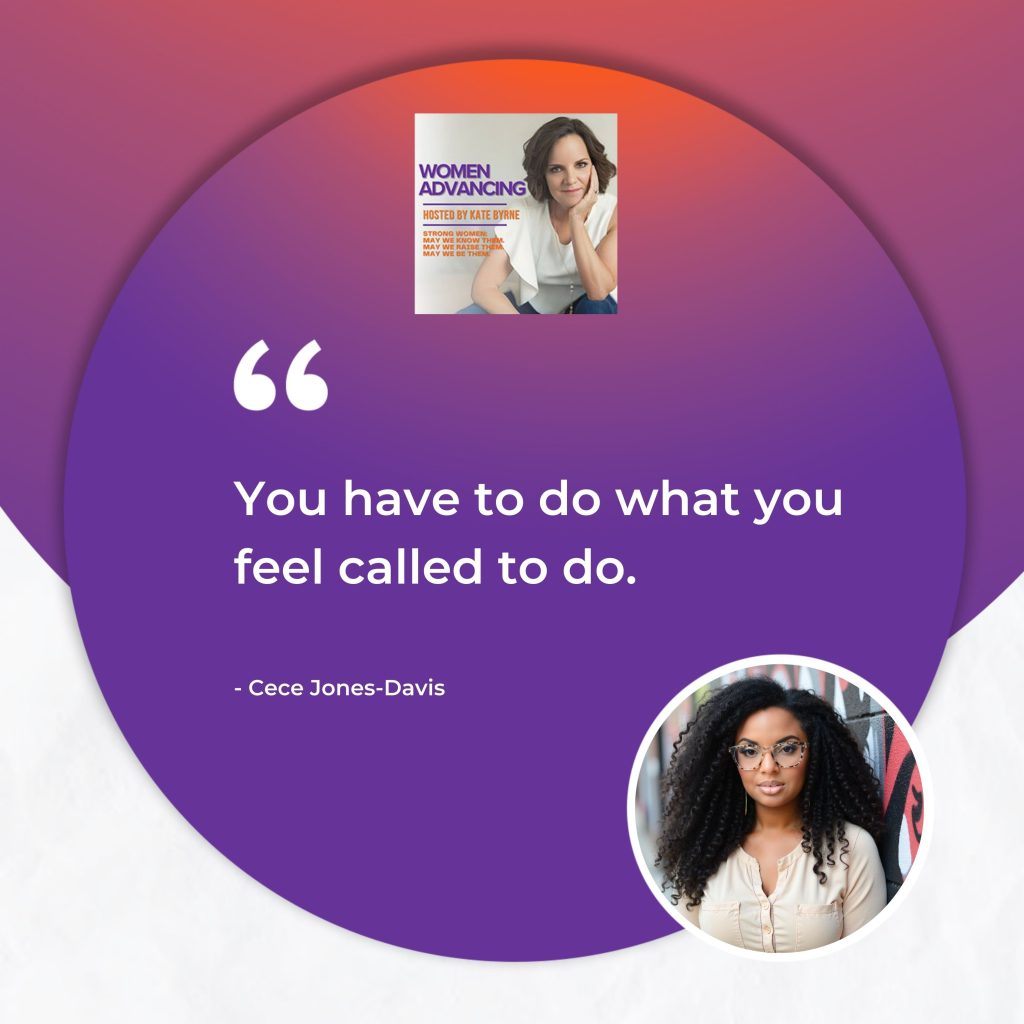
I really thank God for that experience because I believe that it set me on the path that I’m really on. I had to disregard what my family thought about that because I knew that I needed to be doing this. I’ve had to do that along the way. Not about my family, but about other people, about the government, about the church, about all folks. You have to do what you feel called to do.
That really is so true I think especially in these times now, too. Some are slowly finding their voices, hopefully. I think that is one of those things. I used to say that to my daughters about speaking the truth. People aren’t always going to want to hear it, but doesn’t mean it doesn’t need to be said. Just be okay, don’t expect everyone to go, “Wow, thank you.” Still say it you have to. Otherwise, you are at dis-ease within yourself because you’ve seen something and if you don’t say something, I don’t know, I always felt like then am I being somewhat complicit to a degree?
This leads me a little bit because you speak a lot to these resistance systems. A lot of times, you’ve worked with these systems that are slow to change. Deeply in change. We spoke about the church. I want to talk a little bit and have you share a bit about the work that you did with Justice for Julius and how that even came to be.
The Genesis Of The Justice For Julius Campaign
Yeah, it’s wild. I was living in Oklahoma City at the time with my family. I had moved from Virginia there. My husband got a job there so I was there and for the first time was thought I was just going to be a little stay at home mom. I had two really young babies and I had left the Obama administration and was just happy to not be in the rat race of Washington, DC, even though it was a really amazing experience and a wonderful opportunity.
I was happy to be in the middle of nowhere Oklahoma, just taking care of my little ones. I came across a story after a few years of being there. Viola Davis produced a documentary for ABC called The Last Defense. I was home. I happened to watch it and a very long story short, it was about a man in Oklahoma who had been convicted of a murder 18 to 20 years before.
His name was Julius Jones and his case was highlighted. She highlighted his case because there were so many problems in the case with ineffective counsel, with lack of evidence, with all stuff. With a racially biased jury, all strange stuff. It hit me in such a really a profound way. I found a number for the attorneys of his that I had seen in the documentary. I called the number it happened to be a number in Arizona and a woman named Amanda Bass answered, which was Julius Jones’s lawyer.
I said, “I’m Cece. I live in Oklahoma. I saw this documentary last night. I don’t feel good about being in Oklahoma and this thing happening and not doing something. What can I do?” She said, “Thank you so much for calling. You’re such a nice lady. Write a letter to the governor and ask him for mercy.” I hung up with her but I was still very bothered because I’m like, “A letter doesn’t move anybody. What is that?”
Did it feel like a pat on the head like, “Thanks so much. Okay, great. Do your part, great?”
No, it really didn’t. I feel like that was the only thing at the moment that a person in the community could do. Long story short, I didn’t feel settled. I went to social media and posted, “Anybody in Oklahoma, do you guys know the story of Julius Jones? If you’re disturbed about it, show up to this church this Saturday at 12:00.” Saturday came, 25 people came that I did not know well but had some way seen my post.
His mom, dad, sister and brother had heard about my post and so they showed up as well. Julius’s parents came and so we all sat in that little church and none of us were lawyers, none of us had any background in criminal justice. None of us had any background in especially death penalty because that’s a niche of its own.
That was the start of the community coming together. We came together and built coalition over the course of three and a half years and Julius was set to be executed November the 18th 2021. Four hours before that scheduled execution, the governor granted him commutation so he didn’t die. There’s so much that I can tell you about that. That’s an episode all in itself. Being in Oklahoma in particular, in states like Oklahoma, I would say, it is very difficult to humanize a Black man who is incarcerated, let alone a Black man who is on death row.
We had our work cut out for us. We knew that what we were doing was right. No matter what anybody said, even pastors in the area, and that’s what shocked me the most, that pastors, spiritual faith leaders were unwilling to lean in. I think I went into the situation really naïve, believing that everybody had my values, especially if you’re a faith leader. I was sadly mistaken. It was a very much an uphill battle.
Because of that, how do you keep your voice steady? That must have felt like such a betrayal. I can’t think of any other word. Maybe that’s a little hyperbolic. How did the group keep trudging along when everyone the systems all the things that you count on are so uncomfortable with the truth and they know it’s the truth?
Sustaining The Fight Against Systemic Resistance
They know it’s the truth. The DA hated us. The DA at the time hated my guts. He sent word through another faith leader in town that he knew to tell Cece Jones-Davis to shut up and don’t have anybody else reach out to him about Julius Jones because he was going to make sure that Julius Jones fried. Things like that. The governor hated me. The AG hated me and us and the work that we were doing but I think again, a couple of things. I come from some stocky women. I come from women who don’t take a whole lot of crap.
That is just the truth about these folks from where I’m from. I’m not accustomed to running off. My mother hasn’t run off, my grandmother hasn’t didn’t run off, her mother didn’t run off. If they could withstand, stand underneath the weight of racism in the South in the years where they were coming up and moving around the world, then surely, I’m not going to be upset about somebody telling me to shut up.
No brick has come through my window. No cross is burning in my yard. Everything is cool. Everything is okay. Sticks and stones. I also have to say that when you are empowered by the spirit to do a thing, that is another thing altogether because no matter what, I would get up in the morning and it would be like a brand new engine that would turn on. I would get mad about it again like I hadn’t been working on it for a year or three years. I would get irate every morning about this man’s situation and that would give me the energy to keep going but it’s about being really empowered and fueled by the spirit that calls you to the work in the first place.
When you’re empowered by the spirit to do something, it’s different altogether. No matter what happens, you wake up each morning like a brand-new engine ready to run. Share on XThat’s what I was going to ask, how your faith and the spiritual conviction, how has that shaped the way you lead these difficult conversations? It’s really true. You do have to hold space for possibility, for sure, but also a whole lot of pain.
One hundred percent, but my faith does not avoid pain. I serve an executed Christ, so my faith does not avoid suffering or pain. It doesn’t promise me that I won’t suffer that I won’t have pain. Quite to the contrary. Going into it, I knew that it would not be easy, that it would not be favorable and still, we would have to keep going. Spirituality played a really big part of it. I have to tell you, we prayed every week on a Tuesday at 5:00 AM.
The closer we got, the more we prayed and that’s the truth. That’s another very honest thing. I believe that prayer moves the hand that moves the world and I would not at all sit here and pretend like we did this all ourselves. Yes, we worked very hard. I believe that there was something much stronger than us working in the background and helping us along the way.
Dropping the breadcrumbs having you figure out where to go and how to go next. What did you have to learn about caring for yourself? While you’re carrying all of these stories and struggles that are heavy and all of this thing, how do you keep yourself in it but not of it?
The Personal Health Cost Of Total Commitment
You don’t. I don’t. I have not learned that separation. I think that I’m a little bit better now having walked through that particular experience because I could have easily died. I battled a bout of cancer during that campaign.
I’m sorry. Glad you’re on the other side.
Yes, I’m so glad I am too. I had so many ailments. Problems with my heart, problems with my blood pressure, so many problems during that time. I did not feel that I could stop to really take care of any of it the way that I should so I really count it as a grace of God that I made it. That’s talking about my physical health. You can imagine how gone my mental health was. My mental health was not good at all. I didn’t know how to stop thinking about it. I didn’t know how to stop working. I didn’t know how to unplug. All of that was something very foreign to me.
I think that when you really commit yourself to advocacy really means allowing somebody else’s story to live through you. That man’s story was living through me. I couldn’t have any quiet in my mind. I don’t I don’t suggest that for anyone. I don’t suggest my way to anyone because I don’t it was not a healthy place. After his execution was called off, I’m just talking about my own experience right now, I rolled over the finish line just on one wheel, like everything the car was falling apart. I just rolled over on with one wheel. That’s all I had. It took a long time. That was close to Thanksgiving and I just went home and my mom just gave me pajamas and told everybody, “She can’t talk.”
I had it had gone to a place where I couldn’t even put a paragraph together. My sentences weren’t making sense. I had just been under too much stress for too much time. It took a long time for me to recover. It took a long time for the trauma to subside because when the state of Oklahoma or any other state invites you, just cordially invites you through letter to witness somebody’s execution, you can only imagine the things that had happened along the way that led up to that. It took a long time but by the grace of God and community, we pushed through.
What boggles my mind is how a group of folks like the ones you gathered, all of you who gathered in Oklahoma who are just are people. You’re just people that see something wrong and then the systems that are supposed to protect and fix wrong things from happening, it’s like upside down day. It’s no reason why I think all of us now are feeling so confused.
I’m the mother of two daughters. You’ve got children. I see so many women who want to speak up either about things that they see themselves personally, either say in the workplace, in their relationships in school, pick a place. They want to speak up but they’re afraid and they’re afraid of backlash and isolation or some might even be of getting it wrong. What would you say or what advice would you give to someone who feels called to really speak that unspoken but isn’t sure she’s strong enough?
The Role Of The Community (The Village) In Building Courage
First, I’ll put the responsibility on the women and the people around that person. The village needs to support and uplift folks when they are trying to do the right thing. Folks need to be encouraged, people need to be inspired, people need to know that no matter what the outcome is, somebody’s got their back.
Right now, there’s a movement around the country in high schools where kids are walking out to stand in solidarity with the children who are being taken by ICE. My daughter’s high school did that and the principal was in an uproar. He sent an email out the week before to parents about the rumor of kids walking out and what the consequences could be and all of this. I said, “No matter what this email says, you still have to do what is right.” Standing in solidarity with vulnerable kids around this country is very important it is the right thing.
If it’s a suspension, I can deal with a- with a suspension. Do you guys need posters? Let’s make some posters. Whatever. I’ll ride alongside you guys as you walk out, whatever it is. People need encouragement. My daughter had to look at me and say, “Is that all right? Is it okay? If I get suspended for doing this, is that okay?”
It was my responsibility to say, “Girl, heck yeah it’s okay and if you need to walk out for any other reason that’s righteous, then you do that too. I don’t care about a suspension when it’s comes time.” Again, this is a lesson in doing what’s right and letting the chips fall wherever they may. That’s what I’m always going to stand with my children and that’s where I’m always going to stand with other women.
As the community keeps encouraging that woman who is looking back at us to see if what her action is going to be right, our job is to say, “Heck, yeah, girl. You keep going. You do that thing and no matter how it turns out, you’re going to look back here and you’re going to find me because I’m not going to go anywhere. I’m here to support you.” That’s very important, for us building each other’s courage. Very important.
The village needs to support and uplift people who are trying to do the right thing. People need encouragement, inspiration, and the assurance that someone has their back. Share on XI love all that and the beauty of that too is it comes from such a place of abundance versus scarcity. There’s plenty. There is so much. In fact, if we would all just start stepping up, we might all realize that too as opposed to going towards it, as opposed to away from it and staying small. Go ahead. The whole make space take space because when you’re coming from that place, that’s such a brighter light as opposed to the pinpoint of a period, the end.
I love that. Make space, take space. I’m going to take that with me, Kate.
Please do. I’m a big believer and that could be vocally that can be just energetically, spiritually, all of that for sure. It’s really true. It’s not always going to be popular. Again, like everything we’ve been saying, it needs to happen and needs to be done.
Let me just jump in and also say that realistically, some of us wear capes from time to time. Some of us play the roles of she-roes and Wonder Women and all of that. There comes a moment where all of us have to take the cape off. All we are people. I’m not here to suggest that rejection does not hurt. I’m not here to suggest that misunderstanding doesn’t hurt. I’m not here to suggest that loneliness and isolation does not hurt because it does. It hurts to be misunderstood. It hurts to be thought of as the angry Black woman. It hurts to feel like people can’t see that what you are speaking about is like a real issue or a real thing and that you’re just a troublemaker. It hurts.
I don’t want to at all even indirectly suggest that all of this is extremely easy. I just think that courage is built one step at a time, one action at a time, one opportunity to be courageous at a time is how courage works. That does not mean that there is not pain that comes along with that. I just wanted to honor that truth as well because there is pain.
When you’re feeling it, you’re not alone. That’s another thing too is it’s a beautiful opportunity to be vulnerable and again, ask for help and some refilling nurturing that others probably would love to give. I think it’s just for opening up and the more open we are, the more open everything becomes we can speak more to things. Last question for you, Mon amie. Knowing what you know now and have lived and you’re just getting started, I know that, what advice would you give your younger self?
We need to start listening to our bodies more. There’s a way things settle within you that tells you when to move forward and when to hold back. The spiritual and the physical together let you know. Share on XYou’re going to be okay. I would just let her let my younger self know you’re going to be okay. You matter. I would tell my younger self that you matter and I would mean it in this way. A lot of times, when people feel called to do some form of public service or work in the public square, we very much feel like we must live total and complete sacrificial lives, which really takes away from our own self-care and wellness. I would tell that girl have balance.
Remember that the world isn’t just dark. It’s light too. Every battle is not yours to fight. You have to be really discerning about what you are called to. Everybody’s not called to everything. Be very discerning about what you’re called to and in the meantime, take care of yourself because if there’s no you, there’s no work for you to do. I tell my younger self that and I keep telling my older self that all the time.
That’s so true. How do you decide? How do you know? I think I know the answer but I’m going to ask it anyway. How do what’s yours? Versus how do you discern which isn’t is it it’s my I’m thinking physical it just lands. You feel it. You just know like you know.
I feel like it’s a holistic mess is what I feel like. When you are called to something, there’s something that happens in you spiritually where there’s something that’s been targeted in you and it keeps ringing. It keeps ringing in your spiritual ears. It keeps nagging at you louder and louder. That’s why I had to make that phone call to that attorney because it was bothering me. It was louder and louder.
We have to start listening to our bodies more. There is a way that things settle in your body that make you say go forward or stay back. The combination of the spiritual and the and the physical lets you know. You can sit there and you’ll question it for some time and it’ll still keep letting you know. When you’ve had enough of the nag is when you start leaning in.
Redefining Passion As Action Against Injustice
This is something I want to also say, Kate. We talk a lot about passions. What’s your passion? Move towards your passion. What is it that you love? Go towards your passion. I don’t only understand passion in terms of the things that I love. I most understand passion in terms of the things that I hate. I encourage other people to consider that as well because my passion drove me again to work with Julius and his family and the community. It was a global community. It was a national community people from everywhere came together to work really hard.
What’s your passion? Move toward it. What do you love? Go after it. Share on XIt wasn’t that I loved what I saw, it was that I hated with a passion what I saw. I hated the idea that a state could execute somebody who was innocent. I hated that a family was suffering in the way that they were. I hated the way that a whole family’s life had been derailed by the criminal justice system gone wrong. I hated the racism of Oklahoma. I say that to say move towards sometimes we have to move toward the things that we hate. I think sometimes that is, in a lot of cases, the best indicator that we’re being called to something.
That’s where the alchemy happens. You stand toe to toe. There’s sometimes that feeling where you you’re like, “I have to do this even though I see the herald road ahead of me.” Cece, I’m going to set us up to have many more conversations.
Kate, I would absolutely love it. You’re so easy to talk to. Thank you for having me again.
Awesome. Thank you so much to our readers. Yay for Cece and all of her work. I look forward to our conversation continuing.
Absolutely.
—
Amazing. The courage that Cece Jones-Davis has will never cease to amaze me. So many takeaways. Speak the truth, that’s a big favorite of mine, but do it knowingly that there potentially will be some costs. Doesn’t mean it doesn’t need to be said. Just be prepared that the chips are going to have to fall where they may for sure. That’s part of it. When we see something that we don’t like. If we don’t say something, it’s going to really feel uncomfortable in you, because you’ll know that you didn’t speak your truth. That’s not a long-term game at all, not even a short-term game.
They need to wear capes, be she-roes. There comes a time when we need to take those off, because if we completely deplete ourselves, there will be no work. While the issue matters, you matter, so this is a way of making sure that you get a little bit of balance, a little bit of cape care. The issue, sure, everyone talks a lot about following your passion by all means, but oftentimes, the greatest lessons come from having, especially in justice work, facing those issues where you see such wrong, that’s where you have extreme courage.
You’ll become so intimately familiar with your own incredible courage that is deep within you. When we see, we being the village around, see you taking those actions, it is our responsibility to support, have your back, and keep you going by shouting resoundingly, “Heck, yeah, girl. Go for it.” with that, thanks for joining. I look forward to our next conversation.
Important Links
About Cece Jones-Davis
 Cece Jones-Davis is an award-winning faith leader, impact strategist, musician, and public theologian who works at the powerful intersection of faith, art, and social justice. With a heart rooted in ministry and a voice that echoes across grassroots movements and national stages, she devotes her life to pointing people toward the All-Powerful and the least powerful.
For more than two decades, Cece has mobilized communities, advised campaigns, and partnered with cultural institutions and global brands to advance equity, compassion, and systemic change. From fighting for HIV/AIDS interventions and menstrual justice to leading national movements against the death penalty, her work spans both street-level action and high-level advocacy in policy, media, and government.
She served in the Obama Administration under U.S. Trade Representative Ambassador Ron Kirk and played a pivotal role as the founder of the #JusticeforJulius campaign, which successfully halted the execution of Julius Jones in Oklahoma just hours before his scheduled death in 2021.
Most recently, Cece served as Special Advisor of Advocacy and Strategy to the White House for the #IStandWithRavi campaign, successfully advocating to the Biden Administration for a presidential pardon on behalf of beloved immigrant rights leader, Ravi Ragbir. These outcomes have only been achieved by a fraction of advocacy campaigns in U.S. history, and a testament to Cece’s leadership and the power of grassroots faith-based organizing against the odds.
Born and raised in Halifax County, Virginia—a region marked by both the legacy of Henrietta Lacks and the painful history of enslavement—Cece’s upbringing informs her unwavering commitment to dismantling systems of racial injustice and standing in solidarity with communities on the margins.
Her leadership and advocacy have garnered national acclaim, including an Emmy nomination for a televised conversation on racial reconciliation, the Change.org Changemaker of the Year Award, the Innocence Project’s Freedom and Justice Award, the Ella Jo Baker Human Rights Award from the Samuel DeWitt Proctor Conference, and Special Congressional Recognition for her civil rights work.
An ordained minister in the Christian Church (Disciples of Christ), Cece is also a proud member of Alpha Kappa Alpha Sorority, Incorporated. She holds degrees and certificates from Howard University, Yale Divinity School, the Yale Institute of Sacred Music, and Georgetown University, and was named an inaugural member of the Obama Foundation’s Leaders USA program.
Cece Jones-Davis is a prophetic voice for justice in this generation, embodying a rare blend of spiritual conviction, strategic vision, and deep love for humanity.