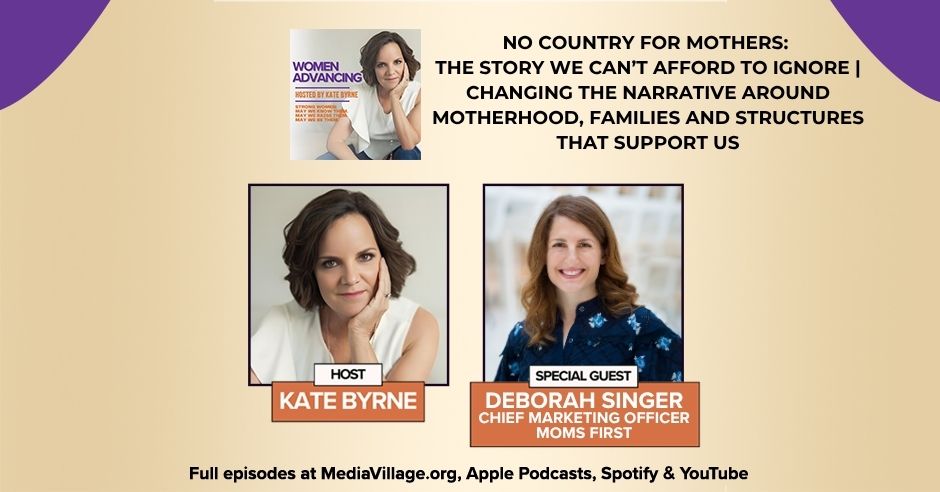
Host Katherine Byrne sits down with Deborah Singer, Chief Marketing Officer of Moms First, to break down why affordable child care and paid family leave remain urgent economic priorities for American workers. They examine Singer’s career path from Google and Girls Who Code to leading national cultural shifts for families. Singer shares how the groundbreaking documentary No Country for Mothers proves that child care costs crushing household budgets aren’t personal failures. She exposes the political tactics that pit working mothers against stay-at-home mothers while starving basic care infrastructure. Katherine and Deborah map out how executive leaders and community advocates can build broad coalitions to demand bold federal policy investment. This conversation provides an honest look at how cultural storytelling builds real leverage for working women across the country.
—
Watch the episode here
Listen to the podcast here
No Country For Mothers: The Story We Can’t Afford To Ignore | Moms First CMO Deborah Singer On Changing The Narrative Around Motherhood, Families And Structures That Support Us
Our conversation is about stories, change, and motherhood. You’ll see. There are some stories that don’t just ask us to pay attention. They ask us to reconsider what we’ve been overlooking all along. Sometimes it’s just staring us right in the face. For years, we’ve talked about the challenge of working mothers as though they’re individual problems to solve. Better time management, more resilience, another life hack but what if the problem isn’t mothers at all? What if it’s the very system itself?
My guest Deborah Singer, who’s the Chief Marketing Officer of Moms First, the Producer of the movie No Country for Mothers, has spent her career helping organizations tell stories that change minds. From Google to Girls Who Code, Tia, and now Moms First. She’s built brands around ideas that reshape culture. She’s helping bring one of the most important conversations of our time to the screen through the powerful documentary, No Country for Mothers.
We’re going to talk about why film can sometimes accomplish what reports and research cannot, what surprised her most during production, why motherhood isn’t simply a women’s issue, but an economic one. What will it take for America to truly become a country that supports families? Finally, let’s make the math better. By that, I mean our work day is longer than the school day. That is not always easy to manage.
Ours is an honest, thoughtful conversation about leadership, storytelling and the invisible work that keeps our society running, both in the direction we like and, in this case, in one that we don’t and what we can do about it. It’s thoughtful and insightful. I encourage you to tune in to the end so you can hear my KB Takeaways. For now, grab some popcorn. Let’s tune in.
Women advancing readers, I’m so excited. I’m excited by most of my episodes, but this one is incredibly important to me and to all of us because we’re fortunate enough to be able to sit down with a very busy lady. That would be Deborah Singer, the Chief Marketing Officer of an organization, Moms First. If you haven’t heard of it, where have you been? Who is the producer and creator behind an incredibly important documentary called No Country for Mothers. With that, Deborah, welcome to the show.
I’m excited to be here.
I’m so psyched. Before we get into the film, I want to learn a little bit about the ladies behind who make the magic. Everyone, wait till you hear this career reads-like central casting, I’ve got to say. To that, you have had an extraordinary career. Everything is from Google to Girls Who Code, Tia, and now Moms First. Looking back, what thread connects all of those roles?
Shifting Culture Through Narrative Power
My personal motivation began as someone who’s always been a storyteller. I’ve always been a voracious reader across a lot of different genres. When I studied in college, I focused on history. I thought I wanted to be an American history historian. I was interested in what are some of the stories that haven’t been told around our nation’s founding. I fell into Google and PR. This was the time when Google was first recruiting on college campuses.
I met the interviewer who said to me, “You can always go and get your PhD later, but the future is being shaped by technology. If you like to tell stories, there are so many interesting stories here.” He was right. That has been my personal through line from Google now to Moms First. As I grew, the goal of it has changed for me. The power of storytelling and marketing is one that can change culture and shift culture because so much of the problems that I’ve seen firsthand, whether it’s the gender gap in technology when I was at Google and then at Girls Who Code.
It’s all of the taboos you run into women’s health or the way that we treat mothers in this country and the lack of support that we give mothers. These are all deeply cultural problems that culture as its own force has the potential to solve. None of these problems we are going to move with, lobbying or direct service or campaigns alone. We have to rewrite the underlying software or code that tells us that it needs to be this way. That has been the through line for me.
It sounds like pretty quickly you figured out, “As CMO, it’s not just about telling the stories. How do I move people? How do I make people feel? How do I move them to act and take action?” With that, what’s the biggest lesson you’ve learned about changing hearts and minds? Especially particularly around issues where people think they already understand, “I know all about it.”
I have learned to win people with facts and stats and win people by being right or having the better argument. I’m a debater. I often think, “This is the better argument.” That’s not ultimately as a marketer and storyteller how you move people. You move people with stories of people who look like them. Before you can ask someone to believe something different, you first have to show them what that looks like. The more specific and the more that you can show the commonality in stories, the better.
For Moms First, that has been what feel like very specific stories of mothers in this country that end up being very universal. That’s something we’ve learned from this documentary film tour. Wherever you go, mothers have the exact same story about what it feels like when we treat motherhood as a personal struggle and not something deserving of economic or social support. It ends up feeling like constant judgment, exhaustion, isolation and being alone.
Facts don't shift culture on their own. Real stories about working families build the leverage needed to change systems. Share on XIt starts by telling those stories and then showing a different way forward also again through stories of what it looks like if we were to provide paid parental leave for everyone in this country. What it means to have time to bond with a new child or to care for a sick parent or a family member. What does it look like if child care was affordable, accessible and high quality? Not something that costs more than rent in all 50 states? It’s fundamentally about showing people stories that they can see themselves in.
Either where they can see themselves or they know people too because that’s another thing. We’ll get into this a little bit later in the conversation about how people think, “I don’t have kids. It doesn’t impact me.” Au contraire mon frère, it does.
What’s nice is everyone has a mother. We all think we know what motherhood is because we have mothers. We make so many assumptions about what the experience is that we have to rethink. The only way to do that is by sharing stories.
Exactly. Is that why you chose the documentary as a vehicle? Instead of get another report to your point, speeds, data factoids or a campaign three weeks and done or a policy initiative.
Making The Economic Case For Care
Research, campaigns and polling have a place. We do a lot of economic case making, particularly for gatekeepers like business leaders or policymakers. We’re in the position to rewrite policy, and for them, they need to see the economic case and be able to understand the ROI of this investment. To ultimately build the broad coalition and constituency that we need to fight for and win these issues, you have to make the emotional case.
You have to shift hearts and minds. The way that you do that is through storytelling and content that moves people. One way to do that is short-form video on social media, which we do and experiment a lot with different types there. We also thought that there was a bigger story here. It’s a complex story that needed longer form, like more time to tell it. The argument we’re making is that the reason is that we haven’t won child care, paid leave, these policies that are broadly popular and have been for decades, but where we’ve never won bold public investment.
It’s because we’re being intentionally divided and distracted by culture wars. You can point to so many instances in history where that has been true. That story takes time to tell it. I wish we’d had ten hours. I’d love to do ten more documentaries because there were so many things that were on the cutting room floor, moments in history where this has been true. Fundamentally, having space to tell that story felt like a great match for a film.
When a workday runs nine to six and school ends at three, the math fails. We can't treat systemic design flaws as personal shortfalls. Share on XHow would you all pick the title? I personally love the play but I’m curious if the way I’m interpreting it is accurate.
It was our working title internally. We always intended to come up with a different title that somehow felt pithier, more commercial but we never found anything we liked as much. We never found anything that felt like it so perfectly spoke to the thesis of the film. Which is that we are not doing enough as a country to support mothers.
We like to idolize mothers and put them on a pedestal and glorify their sacrifice, but deny them any real structural support. We went through several brainstorming sessions where we would hold up No Country for Mothers against other alternatives, and we just never liked any of the others. We ended up doing the copyright clearance on it and realizing that we could do it and going for it.
Exposing Flawed Caregiver Math
I love it. One of the key pieces that I love was the way that it stated that the math doesn’t work. It just doesn’t work. Schools from 9:00 to 3:00 and work is from 9:00 to 6:00. Help me with that one. It’s crazy.
Childcare costs more than a paycheck. Many women in this country go back to work two weeks after giving birth. These are examples that make it so obvious how we are set up to fail.
Agreed. Set up from a time in a land long ago, far away. Things have shifted. The minute we start feeling like we’re getting a little bit of headway, which, by the way, we’ll get into this too, is beneficial to everyone. If something comes, they claw it back. For you, what was the hardest part of making the film? Was it earning people’s trust or deciding whose story to tell?
Absolutely deciding whose story to tell. Motherhood is not a monolith. The experience of motherhood in this country varies substantially by race, class, whether you are a single mother, or you’re in a LGBTQ relationship, or you’ve experienced gender-based violence. There are so many stories that we wanted to tell that we ultimately frankly didn’t have time for.
Now, we’re thinking about how to take some of the interviews we did that didn’t make it into the film and tell that story because it feels so important. That was a challenge. The other one was figuring out how we were going to distribute this film. Particularly at a time when this is not the type of film that the big studios or streamers are buying. They are interested in basically true crime or celebrity hate.
Marvel, here and there.
Mobilizing Grassroots Community Distribution
What we truly want to do, which is get this film seen by as many people as possible, and to have people view it in community. Not alone on their couch, but come together because that’s the theory of change. That if we come together across these false divisions, that’s what it’s going to take to finally win support. Mothers are hungry for these conversations if we can provide space for them. Figuring out how we were going to do that and use our grassroots community as a distribution strategy.
Not waiting for any of the traditional gatekeepers to let us in to give us our medal or stamp of approval. That was hard too. It felt scary. It’s turned out to be this wild success. We’ve had what is probably the largest grassroots documentary ever. We’ve had about 700 screenings in the summer alone, reaching hundreds of thousands of people.
Screenings are happening in people’s living rooms or libraries or churches. Some people even hosting cinemas and have 300 people. They feel ownership in this film in a way that shows me that it’s possible to build this massive mothers movement in this large coalition that’s willing to fight for these policies.
It’s certainly one of the reasons I signed up early to be one of those associate producers who submitted my thing. We’re going to be doing Women Advancing people come out to Charlottesville on September 30th. 5:30 to 8:30 in the Violet Crown Theater, which is terrific. It was saved by three working moms.
That just says it all right there, doesn’t it?
It does.
Who didn’t need another job and yet saw something needed to be done and did it.
Absolutely. Have you seen a shift from when the viewings have begun? The screenings have begun now. Has it become any easier or has there been any movement at all on helping people come to see that this is so much more than a woman’s issue? It truly is an economic and societal issue.
I’ll give a two-part answer to this because on the one hand, I’m a pragmatist and change takes time. I don’t expect that one film in three months is going to fundamentally shift decades of culture and programming. We are at a moment in this country where we are connecting a lot of these structural support issues to affordability. Child care has become one of the leading affordability issues.
People are finally starting to understand that in a time where the cost of living just continues to go up. Gas prices are through the roof. Childcare is the most expensive bill in a parent’s home. That has broad reaching consequences. We’re now at a point where some of these midterm races. We’re seeing candidates run on childcare as an affordability issue and win on it.
We’re seeing, our mayor here in New York City, our millennial mayor who isn’t a parent himself, made childcare a key part of his platform and how do you make New York affordable for working people. That gives me hope that we’re both in a generational fight that is going to take decades. There are real wins that we’ve seen even in the short course of the last several months that are encouraging.
Which is good news for everybody, hopefully. Knock on wood. It is such a strange time. I also think because of that, that’s why so many outlets and platforms who historically would have been open and willing to view are stating, feeling as their hands are tied and the hands cuffed and it’s a fear driven thing. I also think it’s terrific to put the power back into the hands of the people experiencing it. No one can tell a story more real than someone who’s lived it.
I’m so glad you brought up the associate producer campaign and you are associate producer. When we were telling the story, we realized we wanted to make this film a film for and by moms. That part of representing the multitude of stories was going to be collecting those stories and sharing them. Funding the film that way and finding people to help us distribute it.
We had almost 2,500 moms sign up to be associate producers. We broke the world record for most associate producers ever on a film. Now those associate producers are out hosting screenings. There is something in letting go of something that you’ve made to allow other people to claim it as their own. That doesn’t mean it doesn’t come without criticism. I’ve loved hearing some of the criticism about what we got wrong or what we missed or something that we should have included and didn’t. That’s how you build a big tent for an issue.
It’s how you build that trust. It makes that safe space just to get real. It’s also important. It’s important to hear everybody’s perspective. You don’t have to agree on it. It’s not about that. Let’s be genuinely curious. That’s why I thought the coverage of the more trad moms.
I’m so glad you brought that up.
We fund public roads and schools because society needs them. Affordable child care is no different and warrants the exact same backing. Share on XThat’s such an important thing.
We went to the Young Women’s Leadership Conference at Turning Point USA in 2024, which is the organization founded by Charlie Kirk. They let us in with cameras in 2024. I don’t know that they would have done it subsequently.
Possibly, yes.
That there could have been a very easy way to have packaged and contextualized that footage of like, “Look at these crazies.” We didn’t do that. We were genuinely deeply curious about what the modern feminist movement in progressive left missing. Why are women looking for something else? What is it that they’re being sold on the right? How do they respond to that? What about it feels true?
It’s a complicated story. Both are some very legitimate ways in which feminism has left behind many women and has not been able to address particularly when it comes to motherhood, how we achieve gender equality. There were also things that we very much didn’t agree with, but felt true for many of the women we were talking to. It felt like it deserved time and space in the film.
That’s the piece that I respect a lot because that isn’t easy. I know it isn’t. Let’s face it. It’s not easy for any of us to talk to people that we don’t agree with but to stay there. Otherwise, that’s one step towards canceling cancel culture. If we start supporting more integrative work, then that’s the work. We’re not being divisive. I had real respect. I didn’t always like everything, but it didn’t matter. It was fair to hear.
Pragmatically, we’re not winning. We haven’t won a whole child care investment. We have one paid leave. Continuing to do the same things we’ve done, which is making these partisan issues where you have to agree with me on everything for me to support you on this, isn’t working. Let’s try something different.
Truly building a big tent with people you don’t agree with means that there are going to be a lot of issues you don’t agree with them on. We don’t agree on reproductive rights and abortion. We don’t agree on immigration. There’s a lot of agreement around child care, paid leave and needing to value motherhood. Let’s go get that done together.
Having the choice to have it or not, however you want to do it. Anyway, obviously, you’re preaching to this choir. A question for you, though. What’s the biggest misconception you hope the film helps people realize, or I should say leave behind?
Treating Caregiving As Essential Infrastructure
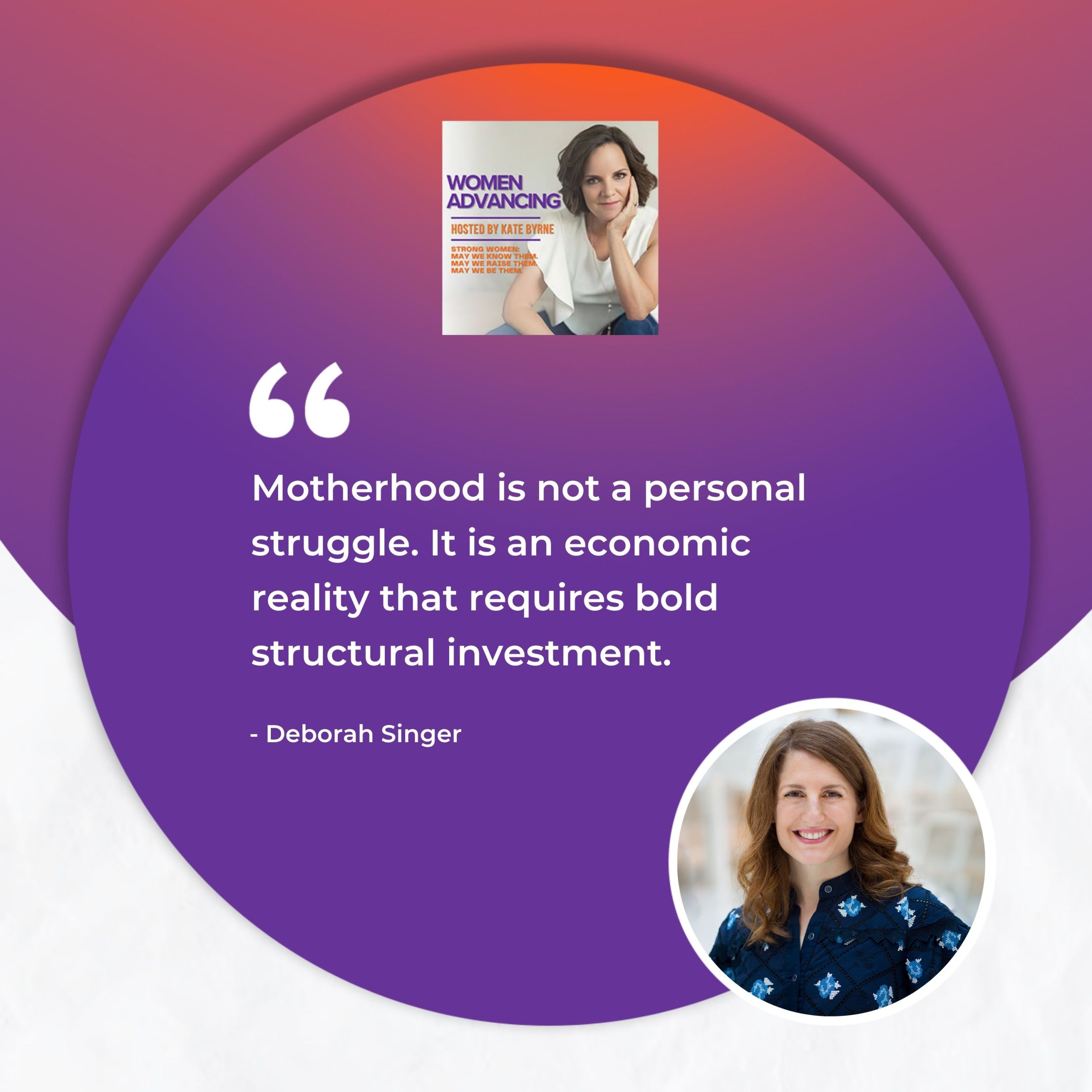
It’s that motherhood is a personal choice when, in fact, it’s a structural one that women decide to have kids. They should deal with the consequences of that, which is caring and feeding for our children. There are lots of areas where we have decided that is, in fact, not the case. That there are public goods, our roads, and our schooling. Since mothers have been able to shoulder the burden of things like child care and paid leave, we haven’t granted them that support.
That doesn’t mean that they don’t deserve it. That’s one thing. We have done that by design. That distraction and these culture wars are a tactic. We see them again and again. We just saw it when the administration announced that they’re considering a rule to divert some of the limited federal funding that the government provides states to help single, low-income mothers with child care to stay-at-home moms. Which is classic culture wars.
Rejecting Manufactured Cultural Divisions
It’s like, “We’re going to make you choose. Stay at home or be a working mom, but you can’t have both.” When in reality, that’s a lie. We can have both. We make decisions about what we want to fund every day. We could decide that we want to take the billions that we are spending on foreign wars and invest them in moms and kids so that we don’t have to choose, but we’re not doing that. Seeing that for the con, seeing the way in which it’s repeated over and over as a tactic is the other big takeaway from the film.
That’s something that I’ve been starting to make a little drumbeat around is this notion of the and era. Enough of the or. It just means you can have wealth and being. You can have family and work but it’s that thing where it may not all be at the same time or it may not be in equal parts. It may change, but you have it. Again, we go back to that notion of the whole thing about choice. Women Advancing is all about creating pathways for women to lead, thrive, go, climb, be curious and grow. If we were having this conversation ten years from now, what would have to be different for you to say, “We’ve truly made progress?”
I have three girls who are young. I’m the oldest of three girls. My answer is one that is both policy and then deeply personal. From a policy perspective, I would like to see bold federal investment in the structural support that moms need and deserve, which means paid leave and affordable childcare. I don’t think we’re that far particularly in a country that is going through a massive affordability crisis. Investing in child care makes sense and is going to be a broadly popular nonpartisan issue.
Rigid career formulas keep you stuck in execution mode. Stay curious and open to unexpected opportunities to build lasting influence. Share on XI’d like to see the next president running on it. It will be on their platform. I grew up with a working mom who kept the most insane schedule ever. She was up at 5:00 AM to cook us and get us out the door by 7:00 for school. She’d come back at 5:00 and feed us, put us down and then do more work. My dad was great. She boars it alone and all the household responsibilities. It’s exhausting. I would like my daughters, if they choose to become mothers, to not be exhausted by motherhood. To not feel isolated by motherhood and to not get caught in this trap of feeling like they’re alone.
Less than if they can’t do it all.
That they need to be able to do it all. I’d like them to see that for the lie that it is and have the structural support to find a different way.
I’d love for there to be new math, so it works. In closing, knowing what now. What advice would you give your younger self?
Embracing Serendipity And Long-Term Vision
I would tell my younger self to be more open to serendipity. That I don’t know the ways in which my career is going to change. My preferences are going to shift. The job market is going to shift. Who knows? Maybe none of us will be working in five years because AI has replaced us. We’re all lying on a beach with that great universal basic income sipping a daiquiri. That would be great.
We’re living through a time of so much unpredictability and change. In some way, that’s the story of how things always are. Being curious and being open to the routes that your life and your career might take is a strength. You don’t need a concrete plan or a ten-year plan. That’s silly. I would never tell my younger self that she needed any visibility into the future that way.
Maybe it’s because there is such a ladder and a structure that we all go through. Milestones that we go through or timeline that we go through. It’s like, “I’m going to do this by this age. This by this age. I’m going to graduate. I’m going to get married.” Whatever your choices are. You get to a point where you’re like, “Now what? I’m supposed to know and it feels weird.” I couldn’t agree more with you. Life is so much bigger than you know so let it be big because you’re bigger too than you know.
It’s never going to be one thing. You were talking before about all the different things that you’re exploring now that you probably didn’t think about or maybe you did. You’re returning to some of your interests as a kid, which is delightful and I hope that we all have space to do.
Exactly. Gather friends. Gather around. I’m going to say this is important, men and women because it’s all of us. It’s the entire village and all ages as well to come and watch this film. If you want to sit, you can do it at your home, church, or theaters or wherever on the side of a wall. Wherever you want.
If you don’t want to host one, you can attend one. They’re a virtual one or in person. They’re all over. We would love people to join the movement and see the film.
I can’t wait to get Charlottesville on fire. Thanks so much. Thank you so much for everything that you do and you’ve done and those lucky girls to have you as their mom. Until our paths cross again.
Bye-bye.
—
I love the conversation that I had with Deborah. I’m so proud and in awe of the work that she and the Moms First team are doing on all of our behalf. If the spirit moves you, take a moment, take a peek and see if you want to download the film or go to a viewing near you or support one in your own home or neighborhood. In the meantime, let’s talk KB Takeaways.
Great leaders don’t just market products. They change the very stories that cultures tell themselves. Why? It’s because that’s how you make change and that’s how you get influence and that’s how movements begin. Why documentary filmmaking? Speeds and feeds. Lots of data. Important for sure. It doesn’t always move you.
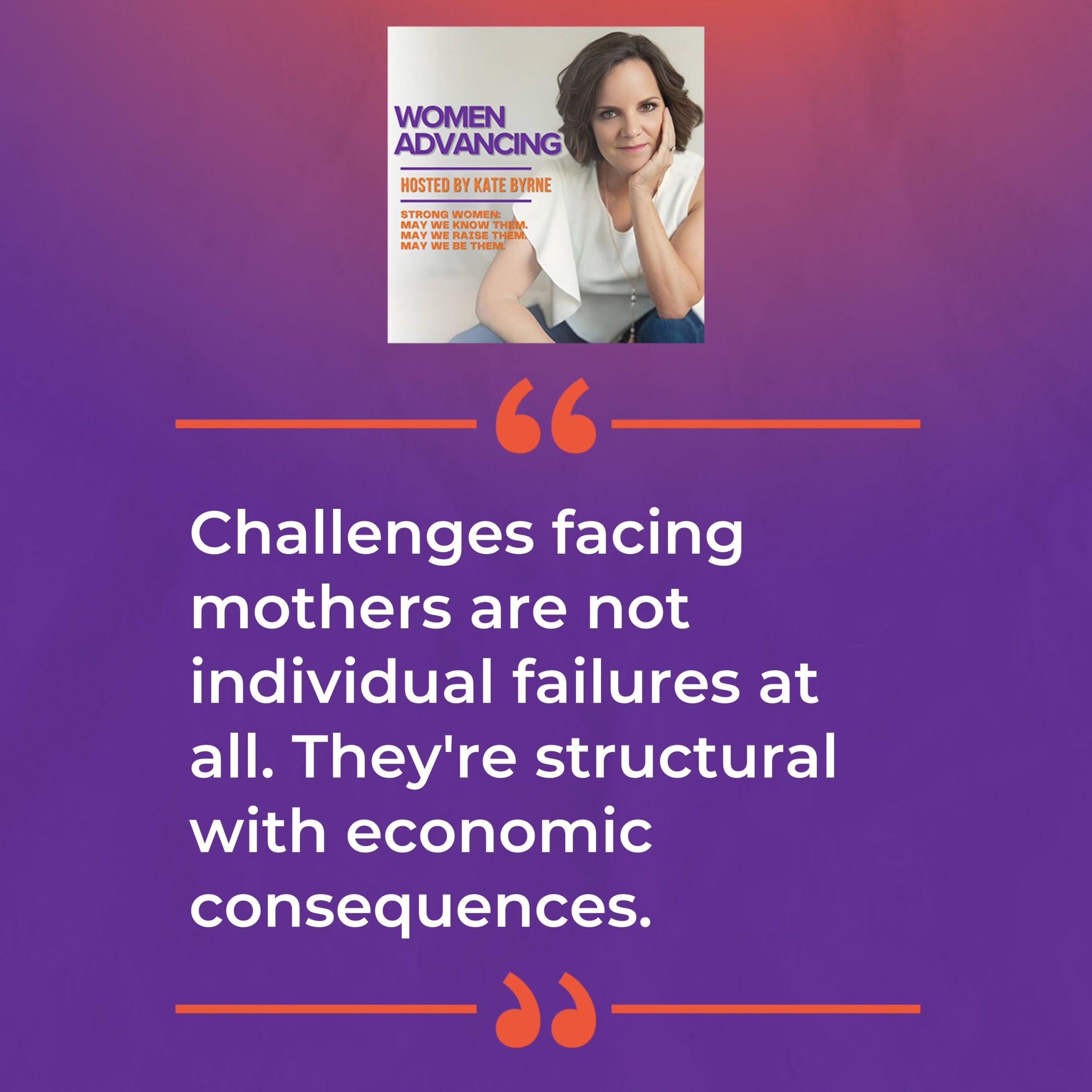
Whereas the documentary filmmaking has a unique ability to bring about those stories to life, but to create empathy where stats alone fall deathly short. Challenges facing mothers are not individual failures at all. They’re structural with economic consequences. To me, this is one of the key pieces that the film does uncover. It’s why men and women of all ages need to rally and get involved.
Supporting families isn’t simply a women’s issue. It’s a workforce, business, and a societal imperative. It’s the only way that all of us are going to rise, grow and thrive. Real cultural change happens when policy, business leadership, and storytelling begin reinforcing one another. Instead of working in isolation or becoming divisive, we just widen that gap. That’s not how we’re going to make things move forward. Progress, how are we going to measure it? It’s going to be measured not only by better policies, but by whether caregiving is finally recognized as the essential infrastructure rather than invisible labor.
This speaks back to a lot of the work of a fabulous woman Riane Eisler has talked about the caring economy. I urge everyone to take a look at her work that she’s done. Remember that the stories we choose to tell shape the opportunities available to the next generation of women and to all families. Finally, serendipity. I love this one. Make the space for it, then fill that space up. Uncertainty is the opportunity. The sooner you embrace that, the more fabulous life will be. With that, thank you.
Thank you as always for tuning in to the show. If you are going to be in Charlottesville on September 30th, please come to the Violet Crown Theater where I, along with Women United from the United Way are supporting and sponsoring a screening from 5:30 to 8:30. That will include a panel which is multifaceted, multi-voiced. Until then, I look forward to the next time we get together on the show.
Important Links
- Deborah Singer on LinkedIn
- Tia
- Moms First
- Girls Who Code
- No Country for Mothers
- Riane Eisler
- United Way
About Deborah Singer
 Deborah Singer is a marketer, movement-builder, and mom. She’s the Chief Marketing Officer of Moms First, leading the fight for affordable child care and paid leave. Before that, she helped grow Girls Who Code into a global phenomenon, scaled the women’s health company Tia, and launched products around the world at Google.
Her work has reached millions of women and families—and helped shape how we think about tech, health, and care. She holds degrees from Harvard Business School and the University of Pennsylvania and lives in Brooklyn with her family.