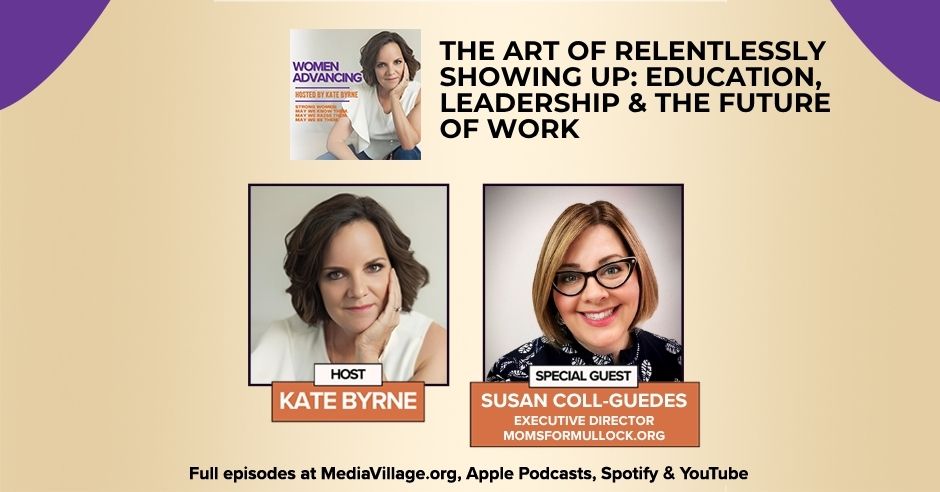
Traditional institutional frameworks often force individuals into rigid models rather than adapting to human needs. Host Katherine Byrne speaks with educator and advocate Susan Coll-Guedes about how inclusive education leadership transforms both classrooms and modern workplaces. Drawing from her experiences navigating healthcare and educational systems, Susan explains how universal design principles create environments where everyone can thrive. When leaders build flexible structures from the start, they eliminate systemic barriers and boost overall performance. Discover why caregiving and community advocacy serve as essential preparation for driving meaningful organizational change.
—
Watch the episode here
Listen to the podcast here
The Art Of Relentlessly Showing Up: Susan Coll-Guedes On Education, Leadership & The Future Of Work
Everyone, I have got to say, our conversation took me by surprise. I really started to see the parallels between education and the workplace environment, how outdated educational systems impact the effectiveness of workplaces, their cultures, and the outputs that come as a result. This has become a new trend where many of the most powerful leaders never ever set out to be advocates.
Navigating Systems Through Personal Advocacy
They’re simply everyday people like you and me who simply reach a moment where silence is no longer an option. Something has got to be done. My guest is one of these voices. Susan Coll-Guedes came to national attention recently through her advocacy as a parent of disabled children, including a widely heard interview on NPR.
What began as the deeply personal work of caregiving became something so much larger, a public voice challenging how our systems from schools to healthcare are designed and who they truly serve. Susan’s work focuses on inclusive education through universal design for learning and arts integration, approaches that ask a deceptively, seemingly simple question. What if we built systems from the start with everyone in mind?
We talk about caregiving as leadership, the courage it takes to speak truth to power, and what so many of those folks who we’ve usually cast aside how they’re the ones who are, in the end, really helping us shape systems that are going to be built to last, meaning that, sure. The kids are learning, but hopefully now so are the institutions. Stay to the end. You’ll hear the KB takeaways and see how the parallels are just uncanny within the workplace. I appreciate any feedback that you’ve got. Let me know who else you’d like to hear from. Let’s listen in.
Women Advancing audiences, you are in for such a mind-opening, heart-opening conversation as we are joined by Susan Coll-Guedes, who is a clinical specialist of art education over at the College of New Jersey. She’s been an extraordinary advocate for children and parents and so many more. We’ll get into that in a little bit. Susan, welcome to the show.
Thank you so much for having me.
It’s my pleasure. Share with the audience where you’ve been that brought you to the conversation we’re about to have.
About what is it that I’m known for? Yes, I’m a clinical specialist in art education. I think of myself as a scholar-practitioner, as an educator. What has propelled me recently is this experience of living in the hospital with my son for 297 days. It is because he’s an adult with disabilities. He has Down syndrome, and he’s medically complex. That hospitalization was really about trying to get home and how difficult it is to work with systems for adults with disabilities and just simply getting home and not being sent to a nursing home or facility or institution, and what we had to do as a family to get Alex home.
It’s an amazing story really, and I know it was so amazing that even NPR had an interview with you and the whole thing led to some extraordinary national attention. How did this personal experience make you decide, “Enough,” from doing private caregiving? Actually, you probably did not think about it as, “I’m going to take a public leadership role,” but you found yourself perhaps in that spot. What was that like, and how did it feel to use your voice that way?
It’s interesting because I do not know if people always intend to be an advocate or to get into leadership, and it found me. It was from trying to navigate systems, and it was for basic survival. It was this desperation, I think biblical, like pulling on the clothing of “I need to get your voice.” It was this desperation of perhaps if I reach, if I keep climbing higher, I will reach someone who will listen and I will get their attention. I was actually able to do that.
That just frustrates me. I’m frustrated because it just shows. It really makes you ask this question of who the heck are these systems even designed for? That’s part of the issue. I know when you finally did get to those people at the top, I mean, did they have anything like either frustration themselves with the system or trying to say, or did they acknowledge, “It’s crazy that you had to go through all this”?
They do. I actually appreciate that. There’s a huge divide between the people who are receiving the services or on the user end of “We need certain things to be able to survive.” There’s the layer of people who’ve designed those systems, but do not include the actual users of the system.
That’s what I was going to say. That’s why everyone, as we know, it’s so important to include the customer, or realize who the audience is.
When you get to the people who are hired, who are our elected officials, I genuinely found shock and disappointment that things are not working the way that they are intended.
I personally always find it fascinating that the people that are leading these things often have no idea what really is going on. I do not mean that because they’re bad or whatever, but it’s just that they’re so far removed and their focus is more on policy that they’ve got a different stakeholder that they’re focused on. The customer aspect of it has been delegated to a degree.
I would actually call that like the lived experience and how important it is to include people with lived experience in that policymaking.
One of the things that you’re in the process of really getting into is focusing on inclusive education. Let’s face it, art is just such a, to me, I think it’s a great equalizer in a lot of ways. It impacts, it allows for both group experience, but also a wonderfully potentially even deep individual experience as well. Also universal design for learning. Talk a little bit about what exactly UDL is.
Redesigning Environments Over Fixing People
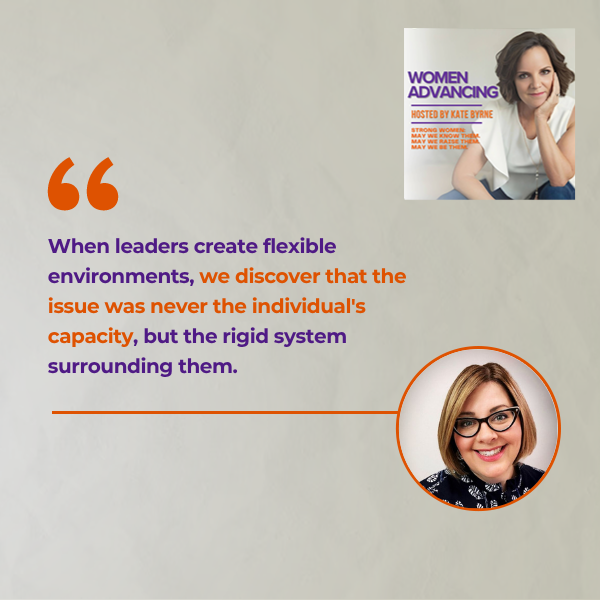
I’m really passionate about this. When I think about this and the research that has gone into this and the people thinking about this, it really goes back to this essential question, this big idea of what if it’s not the people who are the problem, but it’s the system? What if it’s the student who is not the problem, but it’s the learning environment that we have created, and that if we change that, people can be successful? That’s why I’m so excited about it, because as a teacher on my own at many levels, from teaching preschool all the way up through college students, adults, I have seen that when we have flexibility, we can reach people that we had dismissed as having disabilities, as being problematic, as unable to learn, just by pivoting and being flexible.
This is also so applicable to the culture of a workplace. It’s a both/and situation. In this work, what did this universal design learning reveal about who schools really are and who those systems are originally designed for? What’s always blown my mind is the rest of the world is all busy acting and technology is coming in and all of this. Often the very places where we have children and adults who choose to go back to school for the majority of the hours of their days have not kept up.
It’s really interesting to think about what thesis It’s a system. How they are built, they’re built for efficiency and standardization. We have people who are in the arts, who are probably the opposite of that.
Effective leadership isn't always planned, it's born when silence is no longer an option in broken systems. Share on XTo me, that’s systems thinking. You’ve got your left and your right. The more, I’ll say horizontal, not chaotic, more horizontal and linear. It represents both, which is so important.
I always describe myself as a confident constructivist. I understand that people have to learn by doing. I’ve also seen that the way that I teach, the environment that I create, and the trust or distrust that happens in the learning environment have an impact on people. That tremendous learning and growth and creativity, because that’s what we teach in art. We teach creative problem solving. We are creative problem solvers, and I teach people to think in creative ways.
Creative Problem Solving Across Disciplines
I really always think that this is the piece that’s so funny when people want to cut out art, and yet we all want to focus so much on innovation. It has always amazed me, because where the heck do you expect to get the inspiration or that a-ha moment of connecting to unlikely bedfellow dots that then create the next great thing? Share a little bit about the work that you’re doing now and as you see it, and like a day in the life of a student in your class.
I spend a lot of time just with the art education students. I have to say that the art education students, we dwell in two worlds. We are art students, but we’re also going to be entering an environment that is standardized and is based on efficiency. I have to remind my students that we are going to be working in a setting where you need to be showing up Monday through Friday, possibly at 7:00 AM. Do you know yourself well enough? Are you built for that? Do you like people?
It’s such a funny thing to have to constantly talk about that and ask people and challenge them, “Do you know yourself?” Much of the work that we do is really about identity. Do you know who you are so that you are not part of this huge percentage of people who go into education and leave within 5 years, leave within 10 years? I want to make sure, and I spend so much time with my cohorts of students, that we really get to know each other.
I feel like sometimes I will say I’m a matchmaker. I’m going to find exactly what art teacher you’re going to be. I’m going to find the environment that you are going to thrive in and that you are going to love, and they’re going to love you back. Teaching art is so difficult because of all the things that we’ve talked about. Working in a school that maybe does not understand us, that sees us as messy, that sees creativity as maybe not academic, not important.
This is the piece that I really love, and you’ve argued so well that arts integration is not enrichment at all. It’s actually providing access. How do you see creativity and design becoming tools for dignity and belonging, especially for folks who have been historically marginalized by the way traditional classrooms work?
Building Dignity And Belonging In Design
We talk about this a lot in art education. Who are you choosing to represent? The artist that you’re choosing to represent is sending a really direct message of who we regard and who we disregard, who we silence, who deserves to be able to be creative, whose voice gets amplified, and who we silence. It’s a really difficult thing because I think about art as being a means of access often for people, especially when I think about people with disabilities, people who may not have language. Maybe they have some physical limitation. There is something that is limiting them. Art is one way of communicating and having power in this world. Who do we allow to participate in that?
You’ve seen this, and you’re recognizing the shifts that can take place. You start speaking, frankly, truth to power, and you start showing up publicly in town halls and media and challenging the way schools are set up. Also, let’s go back to the beginning where we started. We start melding in this policy shift for care. As we’ve talked about, and I know many women in particular for whom a lot of the responsibility for caring, whether it’s a parent or a child or yourself or your spouse or whomever, I know you started really challenging decisions like Medicaid cuts. How did you go about finding the courage to even do that? What has come? How has that impacted you in the classroom at all or with other parents, or what has that been like?
It is this basic survival instinct. I think about how I will not do it as much for myself. I will not advocate for myself the way that I will advocate for my son who has Down syndrome, because often he’s placed or we as a family are placed in the position of fighting for his life and his right to just live in his house with his family. The most essential human dignity is not being separated from your family. There’s a certain power to that of “I cannot let this happen.” If I do not take action, it is allowing this progression to continue and for this to happen. I’ve now turned into this person that I have learned, and this is probably from my teacher training.
When you see something wrong, you must challenge it immediately. Do not let it continue on. Maybe it’s also like bullying training that we get when there is a policy. Sometimes I see policies that get thrown out there quickly, or somebody sneaks in the side door. Immediately responding to that and alerting other people, “Hey, I’m hearing this is happening. I just want to make sure. Is this happening to you too?” There’s incredible isolation amongst caregivers. There are so many of us. There are so many women, especially.
Creativity isn't a secondary perk. It's the primary engine driving real problem solving in modern systems. Share on XMany women who have left the workforce have been pressured, just the practicality of us trying to manage all of this. We are all going through very similar circumstances and lived experiences at the same time while feeling we’re the only ones. For me to be able to create spaces for people to connect and the problem solved, and I, we are able through our technology and social media to connect people immediately to resources, to support, and help and just be there for people to empower them. That, to me, keeps me going and gives me the courage to keep speaking.
I have got to ask you too. I know the answer, but I’d love for you to share if you did. Disrespect is what I would think it would be as you went to go speak and challenge policymakers and corporations and larger entities. You know, when you go in your advocating, but you’re also, as you said, lived experience as a mother. Did you encounter being dismissed? My question is, how did you do that without being dismissed as emotional or personal? I guess that would be the key. This is so important. Do not get distracted. Do not get distracted. Eye on the ball. What was that like? How did you counter that? I probably would have slapped people.
It helps too. I have had that experience so many times that that is actually normal life for me.
Just me being me and the day in my life.
This is just how I am, the reception I usually receive because I have physical disabilities. I’ve experienced life differently than a lot of people who have more physical capability. In general, being dismissed is something that has been a lifelong experience for me. I’m always like, is this because of ableism? Is it because of sexism? Now that I’m getting older, I’m like, “Is this ageism?” Is it because I’m not qualified enough? Is it because caregivers and mothers and women are seen as one thing only? Can I be more than one identity? Can I come into this place and just be respected?
What’s interesting is it’s not only about people who design systems or have power over decision-makers, things like that. It’s also amongst other families and advocates. It’s really a tricky situation of trying to collaborate with other people, egos that are involved, being dismissed and called an outlier. That happens quite a bit, like saying that, I guess that would be considered. I do not know if that’s gaslighting. Your experience is so unique. No one else is actually experiencing the system the way that you are. I will be like, “I’ve talked to some people.”
I know people.
Power Of Relentless Presence
I have this relentlessness about continuing to show up. Now I think sometimes I think about it as, you know, I’m just this haunting person. Just keep showing up. Even if I am not saying anything, to just be in those rooms and for people to be aware that I am there and to know, “Here’s this presence. I am a reminder. Do not forget about the segment of the population and caregivers and people who want to live in the community and do not want to be sent away.”
I’ve got to say, I think that every presence has got to be really key to the point where that should make folks insist on keeping the conversation going or realize that more and more people are being affected by this. I would also believe that your ever-present encouragement of others who are in the same situation, who perhaps have been silent because of either overwhelm or shame or just belief in it’s never going to change because they tried so many times and yet they’ve had another set of waves to put them back.
What I think about often and when I think about when I was in the hospital with my son for basically ten months. I could say now, “We got through that,” but going through every single day, part of the way that the strategy I had for surviving was to document it every day and to put up a post of my reflections on what was happening and share it with people. People were very invested in this story, and that was my coping technique. When I think about all of this, of moving from telling my story over and over again to really shifting to “I need to change this system.”
I need people to look at the history of civil rights movements and the disability movement and how things have changed, and it just requires showing up. You actually do not have to say anything. You can just be your presence, and just having numbers and having even one number, one person, really can make a difference. I think that was the power that I learned through getting through that time, that perseverance and that holding on even when you feel like you cannot is really powerful, and you will get to the other side. You will get to the other side and be better for it.
I’m assuming too that remembering what’s on the other side is what really keeps it going. It fuels, it keeps that flywheel spinning. It’s what makes you continue to show up again and again. If we truly centered on, I hate to use the word disabled, but disabled students and their families and how we design schools and policies. I’m curious, looking farther out, what would fundamentally change and what leadership would that require? I’m going to say from people in general, but really from women.
This is primarily women’s work. You think about who’s in the schools when I look at who’s in my programs. Who’s coming through and leading this? I tell my students all the stories I always have about bizarre situations and stories about being a teacher. I relish now that where I was fifteen years ago, basically being called into the office to explain my curriculum or getting in trouble. Again, it’s the system level of what it is you’re doing. Now I’m teaching this to our future. I just sometimes, like I was just a little bit ahead of the curve, just slightly.
You don't always need complex speeches to make an impact. Sometimes relentless presence is enough to force change. Share on XYou were an outlier. You were a pioneer.
That art is dangerous. That’s the flexibility we need. That is the flexibility to design curricula to really think about instruction. We really need to think about testing and the impacts of technology. I remember teaching in the 1990s versus the 2000s and how we kept saying, “We are making 21st-century learners.” I’m like, “We’re really far into this now. When are we going to start changing?” Any day. Really changing and not doing changes like dropping the teaching script.
Serious changes to think about. What does the school day look like? What are our individual classes and how much time do we give to that? What do the hallways look like? Really having people think about it, I love when I hear about high school starting later. Think about the student. What do people need, and give the people what they need. Thinking and designing systems with the people who are in those systems in mind. Can the stakeholders be a part of this? Can we talk about what’s actually working for us?
That is a way of, frankly, truly allowing potential. We want to hear so often, “We want to hear an environment where people can thrive, where students can flourish.” We do the absolute opposite because we take all their individuality and stick it in a teeny tiny little thing. It’s no wonder if you think about it, why everybody else goes and escapes into a screen, into a world where they can do all the things.
I think about this too. Who gets the freedom? Who in the schools gets the freedom to actually design their own experiences? It’s actually students with disabilities because of IDEA, because they have an IEP, right, an individualized education plan. When I think about how education needs to look in the future, it is being individualized to each person because no one is going to fit into the standard system. We want creative problem solvers. Let’s make this look like what we’re trying to produce.
The thing that’s interesting about that is that it wouldn’t have a causal effect later when people are actually in a workplace, whatever that’s going to look like. In the future, it’s a little bit hybrid or whatever, but then you’d be based a lot on values, which there’s a lot of talk about but not a lot of follow-through.
I think about after COVID, or during COVID, how instruction. We all went home. I remember I was teaching in the public schools. We were like, “It’s two weeks, we’re just going to be home for two weeks.” I’m like, “This is great, I got two weeks.” I was like, “That one Friday class is really hard. I’m so glad I get a break from that Friday class.” It turned into, “Actually, can you teach online using all of the software?” The divide that we saw in teaching and people who were not able to easily shift into that. Now that we’re back to normal, which is shocking that it’s returned to.
It’s like a step back, frankly, in a lot of ways.
Now I see an incredible rejection of technology happening now. Even with our blizzard and snow days, like we could have had some Zoom sessions happening, but that’s illegal. We’re actually not allowed to do that in our state. We had that moment where we had to be really flexible and teach in a different way. With all of these constraints, we rose to that level. Now that we’re back in session, we’re going back to the tried and true. This is how education looks.
Individualizing Systems For High Performance
I am haunted by when I was working with the George Lucas Educational Foundation. I am haunted by the comments of a student when we were going in to do a story. Literally, the student said, “I have to like dumb down to come into the classroom.” I just thought, no wonder then everybody’s frustrated, bored, and acting out because you’ve got all this. The flourishing world out there where there’s so much information and even the world on a screen. You come into this static, weird step back in history. The disconnect is just palpable.
The pressure to pace things so that everyone is moving at the same rate. Please do not do that. That is actually the opposite of how we should be doing things. It’s for students who have that need to move on, who need a challenge, who need novelty. Our students who are often labeled as having a disability, having ADHD, need to move at a different rate and pace than other people. It’s not extra time. Everybody’s like, “They just need extra time, slow it down.” No, they need to be moving, and tinkering and working.
Mentally stimulated. It reminds me, and I’m just going to sound bad, but it makes me think we’ve adopted a rescue Foxhound. That dog needs a lot of mental stimulation. He’s scent-oriented. When he’s in a while, he’s doing his thing. He’s not being naughty at all. That’s literally how he’s wired. With these kids, that’s what these kids are. Some can take a ton of information until they’re done.
To your point, I really see that, and really catering. I hate to say that word, catering, but delivering what the student actually needs is so important. What do children, these children in particular, and their families understand about resilience and systems, humanity, that policymakers still miss? Are the policymakers like the school curriculums of old, and they’re a little bit stuck in it, if your feet are stuck in the cement? Is it because we’ve made it so overly complicated to make any change?
It’s very interesting when I talk to people and learn to talk to different people who take on different roles and different leadership roles. What I have learned is to try to navigate talking to different people and their capacity for understanding and their capacity for learning and taking this feedback. Some people do not want to hear stories. They do not want to hear about the struggle, and that shuts them down. Some people do not want feedback. It’s painful for them.
They’re taking it personally because they’ve designed this thing, and how could this thing possibly fail you? That’s where people become outliers and get pushed to the side of like, “Everyone else is happy. I’m only hearing good things. I cannot get any of this negative feedback.” Realizing that there are other people that they’ve got two minutes. That’s all they can give to you. You need to have the problem as well as the solution for those people.
Do you grow up with issues, problems, or opportunities, solutions, and execution?
Yes. Knowing that too, but it’s really great how, when I moved into this place, I had a problem, but I’ve also had to put a great deal of time into thinking about what the solution is. Pitching the solution to people. Hopefully it also costs no money.
If you want to know what an organization truly values, don't read their mission statement. Look at their budget. Share on XThat’s the key. No cost at all. That’s talking about managing expectations. That’s the thing, the reality check of all of it. Taking a step back and looking at it. We have this ball of money. What should we be spending it on? We’re allocating it where the greatest business, where the greatest ROI is going to be. Some of this is actually doing the work that you’re talking about. I’m going to argue that there are going to be more and more. This is going to be a trend. This is growing. I should ask you that. Is this a growing situation? I would think, for some reason, to me, it feels like it would be because of the generation’s focus on technology and the older generation who are up in the ivory towers are less so.
It’s so interesting to think about higher education in general, and this idea of return on investment that’s coming up now. It’s coming up now with changes to student loans, and who’s considered professional, which programs are considered professional, who gets access to education. I’m so about access. Now thinking that I am in a line of work that is so undervalued. That education is undervalued. Why put money out for the kids to make more teachers, even though we are required to educate our people?
We’re making it so difficult to even attract, retain, and train our teachers and have young people go into this. The thing too, yes, the most creative people are the artists. They are the creative problem solvers. We’re also saying, do not put any money into those art programs and cut those art programs. It’s just this very strange place to be constantly trying to convince people that this is important work. Although on some level, everybody’s like, “Yes, it’s important, but the return on investment is so poor.” Yes, for human dignity, we need to educate people, and we need to really work on creativity and creative problem solving. We also will not allow people to enter into this field.
Human dignity is too soft. It’s like a soft skill versus a hard skill. What I just heard through that whole thing is it’s amazing to me about how I was just talking about access the other day and about teaching and how it’s just so undervalued in so many ways. Yet at the same time, if we were to lay this out, and this was a business proposition, quite honestly, and you actually looked at the entire system from birth all the way to school to contributing citizens.
I guarantee you it would be so obvious. It would be so amazingly obvious what needs to happen. I also wonder if things like AI, if we took a different stand early on in education, which actually celebrates the very individuality of humanity. You wouldn’t be worried about AI because you’d understand. This key piece. Nothing can replace that. Also, by the way, we’re the ones who are building it.
I have no fear of AI. It’s so controversial in education. What have I done? I have changed my teaching, so it is not about “I’m going to give you a five-page paper.” It’s too easy. I really work on a lot of eye contact in my teaching. Now I actually know that everybody’s using technology all the time, and I love it. I am a huge fan of it. When we are in our teaching space for that hour and 20 minutes, however long our class is, I’m going to ask you to put that down for now. We are going to have this interaction as human beings and then go back, go back into that world and have both of those pieces. I see it as a tool. I see it not as a problem. I’m not scared of it. I see it as something that will help level the playing field for people with disabilities.
Budgets As Direct Value Statements
It’s really important, which goes back to access. I can tell you when I spoke with friends over at Microsoft, they’re all saying, “This is a game changer,” just because it gives such access across all sorts of diverse stakeholders. Everyone had the same shot. It will be reliant on the human who’s interacting with it to guide, and really, control is a nebulous thing, but to at least guide and direct and to navigate.
It’s a reflection. We often talk about it in terms of the hallucination part of it. I really see it as a reflection of the quality of the interaction of that person and what they are bringing to it. When people talk about it being wasteful, I think about it. Do not use it in a wasteful way. Yeah. Right. Have it for a higher standard for betterment of understanding and for helping to create more equal access for people. That to me is the power of it.
Susan, one last question, and this will be a fascinating win for me, for you with some of the, as you have said, self-spoken disabilities and things that you’ve been working with throughout your entire life. Knowing what you know now, what advice would you give your younger self?
I didn’t think I was going to get emotional. Do not have shame that this story is not a tragedy. How powerful all of us are. We are so much more powerful, and we have so much to offer and preserve dignity. My experience of walking this walk with my son and seeing it not from this place of, yeah, it’s a tragedy. He cannot do so many things. He has to rely on so many people and so many systems just to get through the day. I really see it as his life is a lesson. It’s a work of art, and I get to see it being made over time.
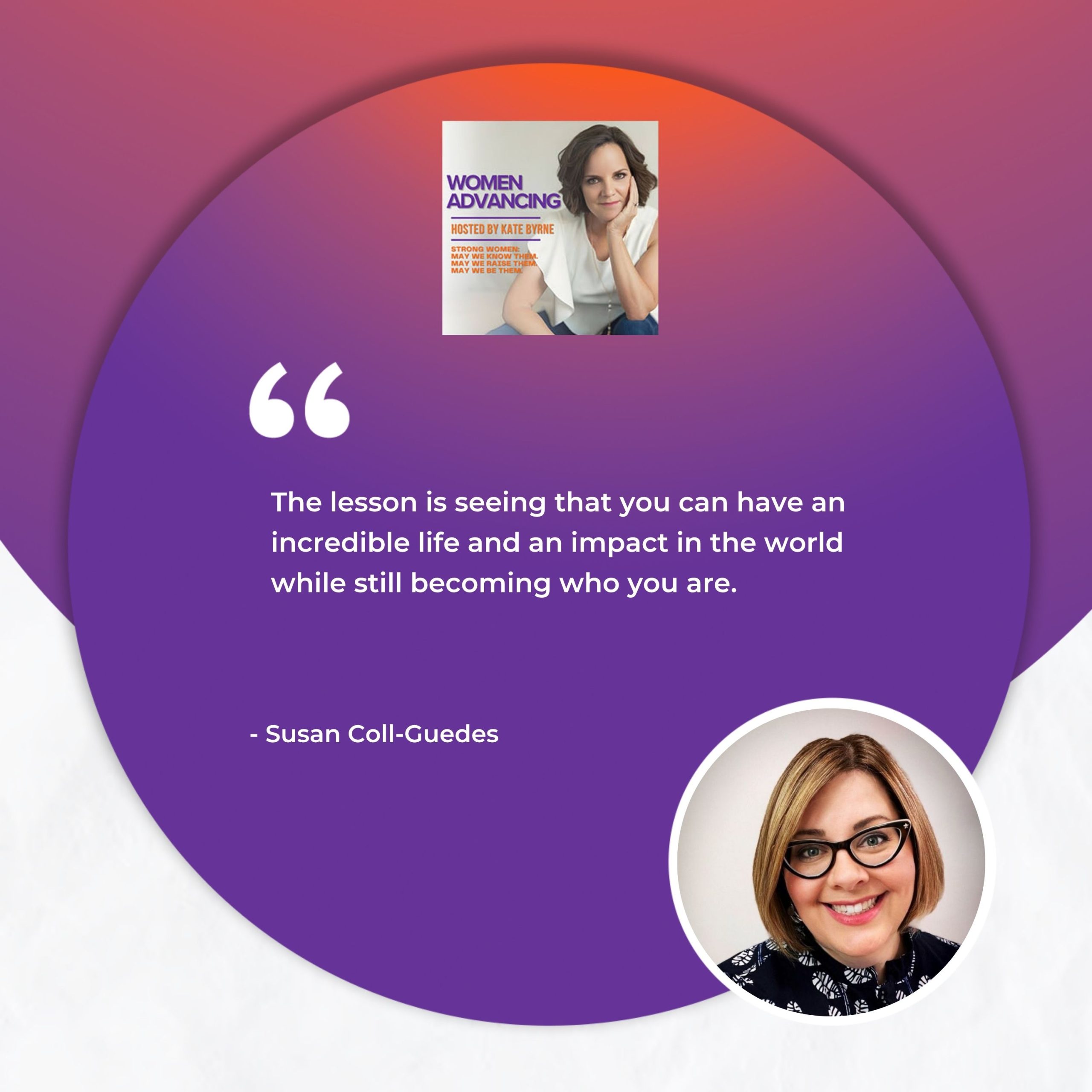
The big lesson is seeing that you can have an incredible life and quite an incredible quality of life, an impact in the world, and still have disabilities, still be imperfect, still be becoming who you are. I do not fear aging. For my younger self, it is “Just go through this process.” It’s such an artful way of looking at things too. I am the product, but it’s also like this process is beautiful and accepted and just stays steady with it. That is just such a beautiful way to think about things and to approach things.
No kidding. You’re getting me emotional. Susan, thank you so much for having the courage to share your story, but to step up and be this persistent voice. I’m going to say to also own all of yourself. I think that’s a really big challenge for those of us who have other challenges. Everybody has issues with that. Honestly, to witness you and all that you’re doing and all that you’ve done and the impact that you’ve had.
The greatest impact is this extraordinary, fabulous life that your son is having now, as is his right. Thank you for everything that you’re doing. Thank you for taking the time to have this conversation. Everyone, going to be having Susan’s information in the blog, so please do not be a stranger and reach out to her. Are there ways that we can help the cause too, Susan? Is there something we could all do?
Definitely reading things. Understanding and knowing that people, especially people with more significant disabilities, know how important Medicaid is to their lives. How important it is to whatever your political line of thought is, to vote for people who care about people and care about the rights of people and advancing civil rights of people and understanding that budgets show our values and participate in this whole process of getting educated and staying educated. That’s participating in this.
Thank you so much, Women Advancing audiences. This is a good one, a deep one, good, very reflective. I really appreciate it.
Thank you so much.
—
That was an extraordinary conversation because when I set it up, in my mind, I was thinking about the conversation about really advocating and having the opportunity to take a personal experience and then drive it into a national conversation, which this was. I do not think I realized, though, quite the parallel between this situation, this education-oriented situation, and the workplace. With that, KB takeaways. One is, relentlessly showing up. Persistence, which we know we talk a lot about, but knowing when you’ve hit a block, but still not taking no for an answer and figuring out, it just means that no they always say is leading to a yes.
It just means you just have to see those noes as opportunities to finally craft and hone your delivery. With that in mind, thank you very much. Know who your audience is and set your own expectation of what their capacity is for understanding what you’re about to tell them and how they like to accept and receive information. I know that seems like a dumb whatever. It’s actually really not. I see this a lot with founders who are in the process of trying to get funding, and they want to go and try and get venture money when they’re nowhere near ready to get venture money.
Make sure that you’ve crafted your message to align with the audience who is going to be receiving it. Set your goals accordingly so that you yourself do not get discouraged. That creates a load of problems such as a downward spiral, disappointment, which leads to procrastination, and then sadly, self-fulfilling prophecies. No, good. Lastly, budgets truly show our values. I encourage everyone to really look at how and where you are spending, how and where you are investing, and where those folks invest their dollars.
I just want to thank Susan Coll-Guedes for sharing her story. It takes a lot of courage, a lot of bravery to step up. Think about it. If we really kept education inside the classroom, updated as we are out there, there was always going to be a little delay. What a different world it would be. Also, I think gone would be the generational gap. Anyway, continuing the conversation as always, thank you so much for your feedback. It means a lot to me. Do not be a stranger. I look forward to continuing the conversation. Thanks so much.
Important Links
- Susan Coll-Guedes
- For some Philly-area parents and autism advocates, Trump’s Tylenol report reveals split on research, treatment efforts
- South Jersey Democratic Women’s Forum on Facebook
- Moms for Mullock
About Susan Coll-Guedes
 Speaker, educator, and advocate inspiring communities to create more inclusive schools through Arts Integration and Universal Design for Learning.
Susan is an Inclusion Facilitator for the NJ Coalition for Inclusive Education and specializes in professional development, constructivist teaching approaches, and strategies to increase student engagement.
Susan is the President of the National Art Education Association Special Education in Art Interest Group and adjunct faculty at Moore College of Art & Design and Temple University where she teaches Special Education and Arts Integration.