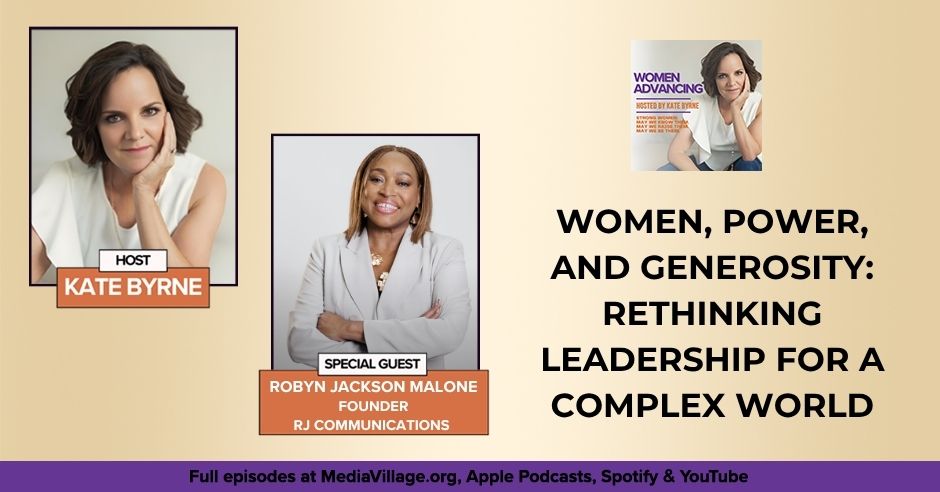
What does it truly take to lead with both warmth and unshakeable authority? In this episode, host Kate Byrne sits down with Robyn J. Malone, Founder of RJ Communications, to explore the misunderstood power of leading with generosity. After 30 years in PR and communications, Robyn shares how an unexpected pandemic layoff led to building a thriving, human-first agency where seeing the “whole person” comes before tracking badge swipes or retinal scans. Together, Kate and Robyn unpack why generosity isn’t softness—it’s a high-stakes strategic practice grounded in discernment, boundaries, and self-trust. They dive into the shortfalls of traditional Western leadership, why AI can never replace human relational intelligence, and the vital importance for Black and Brown women to take up space without apology. Tune in for a masterclass on throwing out rigid control models, refining your edge, and leading with radical clarity and care.
—
Watch the episode here
Listen to the podcast here
Women, Power, And Generosity: Rethinking Leadership For A Complex World With RJ Communications Founder, Robyn Jackson Malone
The Evolution Of Strength In Leadership
Decisiveness, control, certainty. Wank, wank, wank. Very linear. These words have long been associated with leadership. Just like sailing, leadership rarely gets tested when things are simple, but it does when stakes are high, dynamics are messy, and that lovely human element refuses to be managed away. My conversation is about a different kind of strength, one that is so often misunderstood, especially for women, and that is generosity.
Not as in over-giving or self-sacrifice, no, sorry, but as a deliberate, discerning leadership practice. One that shapes how we navigate power, conflict, and uncertainty without losing ourselves in the process. My guest is Robyn J. Malone, the founder of RJ Communications, who has worked across cultures, systems, geographies, and leadership environments. She brings such a deeply nuanced perspective to what it means to lead with both clarity and care.
I am going to add empathy. We talk about what generosity actually looks like when the stakes are high, why it is so often mistaken for softness, where Western leadership models fall so short, and how we, as women, can hold both authority and warmth without apology. Maybe most importantly, it is about a quiet, powerful reframe. You are not losing your edge. You are refining. Be sure to stay to the end. There are some terrific KB takeaways. Let me know what you think, and I will see you on the next episode.
Women Advancing audiences, please join me in welcoming a true powerhouse, Robyn Jackson Malone, who is the founder of RJ Communications. We’re going to talk about women, power, generosity, and all sorts of things, and rethinking leadership in this crazy ass, yes, I said it, complex world. Robyn, welcome to the show.
Thank you so much for having me.
Robyn is joining us from the lovely Dominican Republic. Lucky lady. Robyn, before we dive into some really great questions and deep conversation around your notion of meeting with generosity, would you share with folks how you get to where you are right now?
From Unplanned Consulting To Agency Growth
I have been a communicator in communications and PR for my entire career. We are talking 30 years. About six years ago now, I got laid off as so many did during the pandemic. I started consulting, and honestly, clients followed me, and an agency grew around me. It was not even an intention on my part. Do you know what I mean? It was not intentional. It just happened. That was six years ago, and here we are.
Which is tremendous. Now, living through, I am not going to say living. I am going to say thriving, which is terrific. I can only imagine why, because I know you take so to heart the whole notion of meeting with generosity. Talk a little bit about what that phrase means. I would love you to also shed a light on a leadership context. We will get into that later. Start off with that.
Seeing Employees As Whole Human Beings
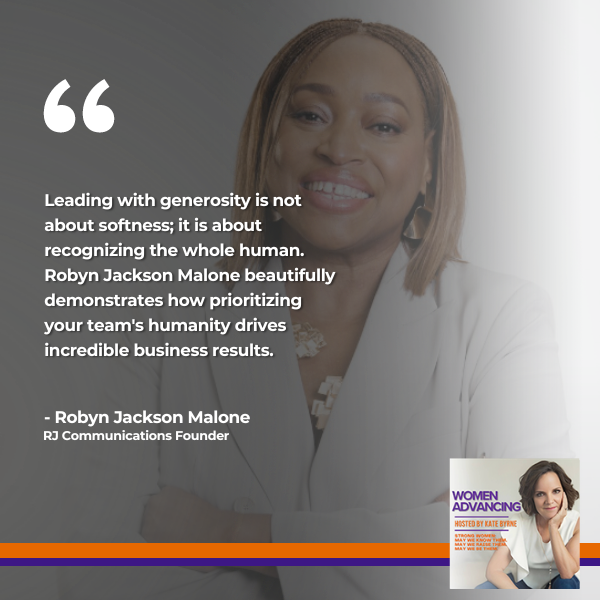
Leading with generosity for me is really about, this is going to sound so trite, but it is really looking at the person as a whole person. It is not just a person that stands in front of me or on the computer screen doing work or responding to emails. This person has their whole self that exists outside of the sliver of their life that I interact with. The generosity piece comes in. It is the whole person first. What I have found is when you do allow, when you do lead with the generosity of understanding that there is a whole person, then the work comes with it.
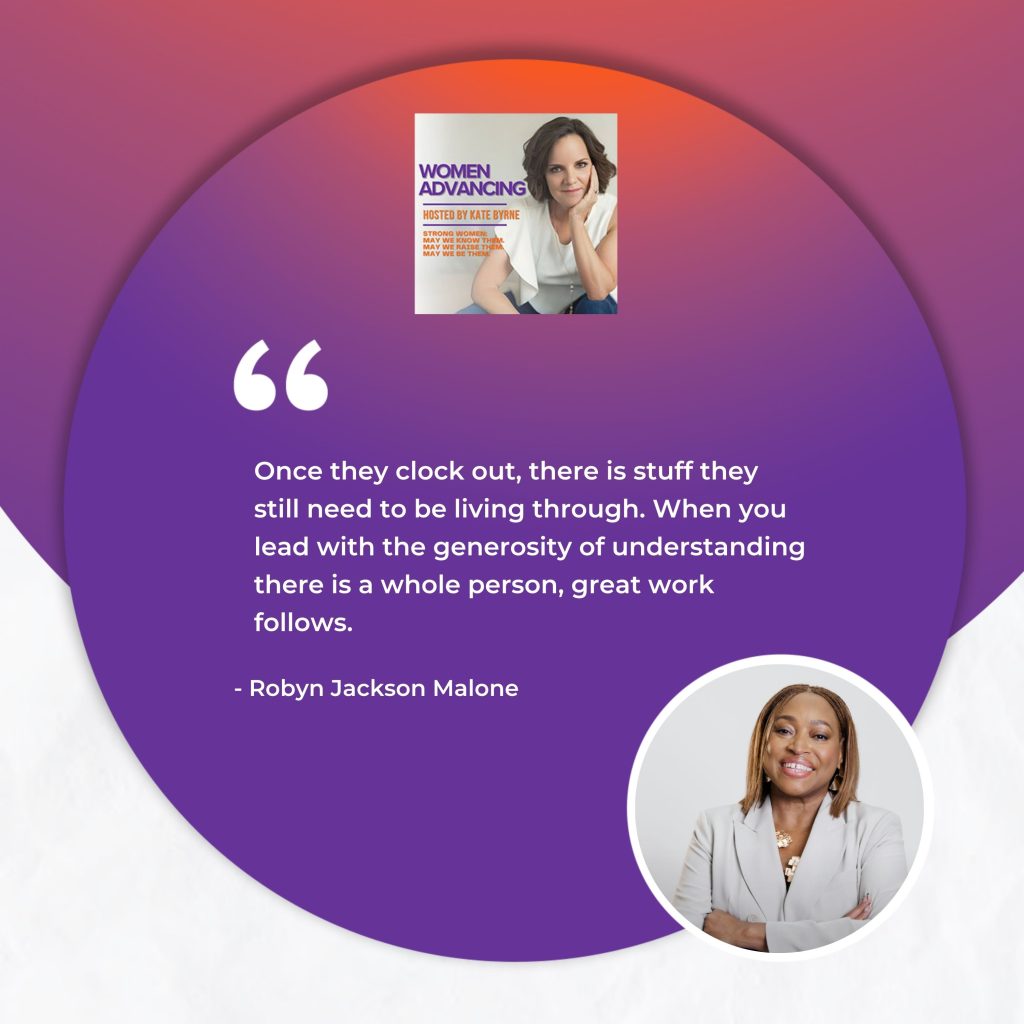
There is great work that follows. There is trust. There is growth, there is curiosity, there is a rapport and sometimes an intimacy that develops that really helps relationships, and it helps the work. We are a small agency, so the work is critically important at the same time. Once they clock out, if you will, then there is stuff that they still need to be living through and working through and dealing with and enjoying. I pay attention, a lot of attention to that.
Interpersonally, I love that understanding that it is an intimate relationship, especially when you are talking about communications, because you are helping someone. Especially in leadership spots, I think sometimes it is harder at older school to really allow yourself to be so vulnerable. What does generosity look like in high-stakes contexts? What does it not look like?
Managing Deadlines During High-Stakes Personal Crises
High-stakes context is, I am trying to think of an example. We are running up against a deadline, or there is a particularly prickly client who is sniping, and someone has something tragic happen in their family. That recently happened. It is like, “That client is fine. We will figure it out. We will work with them.”
“We will get there.”
Like, “Do not even think about us or work. Yes, I know that you are responsible for this and you are leading this and the client is sniping and being prickly and deadlines and whatever, but I do not even want you to think about it. I would be angry with you almost if you thought about that versus taking care of yourself right now.”
To me, too, that sounds like that is a great example of how generosity actually shows up as a strength rather than a softness. Because you, as a woman, and I am thinking of other women who are navigating complex power dynamics. The old models, they all reward decipherance, control, and certainty. You can have both.
The Futility Of Traditional Micro-Management Models
I just got to be honest. The old models I really like, they really stick in my craw now. They really do. It is similar to I have many friends who many of them are marketers or PR people who are now being forced back into the office. Why? What is wrong?
We have data that shows.
It is so nonsensical to me to meet, and then these are senior SVP, EVP-level people. Their badge swipes are being counted and logged, and what? Again, people with 25 and 30 and 35 years of experience who are trusted, but every now and again, they have to wiggle their mouse to make sure that someone knows what they are like. “What is this?”
It is so interesting. I know a couple of companies, especially media, actually, where they do retina scans and then, exactly, there are cameras. There is the same thing. They are measuring how often.
I find it beyond ridiculous. My team, I am like, “I do not care.” I need you to be responsive, and I need you to get the work done.
That last piece is “I do not care.” It sounds right too. The proof is in the pudding, but it actually really is, especially again, in a relationship and a dynamic like this. It is going to be evident in the outcome. If it works, there is no catching you. Same thing in sales. It is obvious if you have done the calls or you have not done the calls because it is a numbers thing.
It is silly. Folks are doing themselves a real disservice because they are creating a culture of robots that do not feel as motivated to do more than they are looking for. Instead, they want to be Big Brother. Everyone is an adult. Like, we do not need to operate this way. I think it is silly. One of my team members, my chief of staff, is from Jamaica. She spends at least 4 or 5 months in Jamaica every year. Great. Take me with you next time. There is another one, my digital strategist.
He is a dad of two busy teens. He is a pillar to post with games and whatever. He is going to chuckle when I tell the story. They raise chickens, and so they have competitions and stuff like that. He is like, “No, we got to show chickens.” I am like, “Lovely.” I want to see pictures. You know what I mean? It is just, I think when we discount the whole person, and the badge swipes and the retina scans and all of those things, we absolutely discount the whole person. They are only focused on the sliver of the person that they can exploit.
In this day and age where people worry about being replaced by AI, pretty much the more you fall into that sort of practice, the easier you are going to be seen, I believe, as a widget.
To me, I have always said, I am not afraid of being replaced by AI.
Generosity in leadership is not softness. It is a deliberate strength that shapes how we navigate power without losing who we are. Share on XNor am I.
I am not afraid of that. I think I am more likely to be replaced by someone who knows how to use AI better than me.
I hear you on that.
That is the, it is not a danger, but that is what people should be focusing on. Do not worry about AI because AI is here. It is not going anywhere, and it is going to do what it is going to do. What are you going to do with it?
We see that. We know that. That actually is something that you do have some control over. I mean, you do classes, can do all sorts.
You have all the control over that. You have all the control over how you use AI, how you incorporate it, how you up-level the work that you are doing for your clients. You have all of the control over that. The idea that AI is going to replace you, I think it is misplaced.
I want to come back to the AI conversation in a sec, but you just were talking about working. I know you have worked across cultures and geographies. I am curious. How has that shaped your understanding of leadership styles, and where do you think Western leadership is falling short?
Do you know what is interesting? As I just did, I wax on about it. Silly this march back to work and back in the office. It is silly. I think the clocking in and all of that Big Brother stuff is silly. Let me tell you where I am a bit of a hypocrite. I had a team member who would be on a new project or a new client, and she is a junior and learning. I was intentional about bringing her on because I saw something in her, and she wanted to learn. I was happy to take that on as an agency, etc. I would say, “There are a couple of projects I would love for you to tackle.” She would say, “Can you send me an email with all of the details?” I am like, the Gen X in me, I got my letters wrong.
No, any of it. I love where this is going.
The Gen X in me was like, “Excuse me, ma’am, like do the work, right?” I could not imagine a world when I was that age where I would say, “Send me the details, and I will let you know what I want to work on.” I could not imagine a world. At the same time, I so admired it. I so admired how she said, “Not everything.” For any number of reasons that work and it does not work, and you have to know where you are and who you work with. She had a sense that I would always. My pearls were clutched. I was like, “What do you mean, ‘I will let you know’?”
I will get back to you. This is funny, Robyn, because this leaves a beautifully nice segue, my friend, into my next question because, to your point, we are supposed to be warm, but then also the goal is eventually to be authoritative. How do you think about boundaries and self-trust and discernment when you are leading with generosity? I say power to her on the one hand, but how does that, what do you think about that?
Drawing Guardrails And Setting Operational Boundaries
I did have to draw a line. It is not hard, but it is not easy, if that makes sense. It is not a difficult thing to do, but it is like, now I have to, I have got to, and then I feel like, am I betraying my values? Am I stepping outside of how I am, like, “Do whatever you want to do, get the work done, be responsive.” That is all I care about. Make sure things are on time. Clients are happy. That is all I care about. I am setting some hard lines. I did have a moment or two where I was like, “Am I betraying my own boundaries and what I want this company to be?”
When I sat with that, I realized it is because I still do have to do the work and do whatever you want with these guardrails. Guardrails are just that, guardrails, and I am trusting you with those guardrails. If those guardrails do not work for you, then you might not work with us. I did have to draw a line with 1 or 2 folks where I said, “I do not know that this is going to work.” Now that person drew boundaries. They had their own boundaries, fair enough, and I respect those.
To the extent that I can work with them or around them, and I value you as a contributor and as a team member, absolutely. When it gets to a point where they are bumping up against our needs and what is most important, then I cannot, unfortunately. For a while I shape-shifted because I wanted to be flexible and be respectful of people’s boundaries, and that was fine until it was not, and so I had to draw those lines.
That is a really interesting point that I think is so important for anyone who is particularly in a service-oriented company and a leader is yes, to a point, there has to be mutual respect, frankly.
Yes, mutual respect and understanding that at the end of the day, you are a whole person that I see first. I see the whole person first, but I also am running a business. That is the bottom line.
I also think it frankly demonstrates extraordinary confidence on your part, where it is like, “Look, it is just as much a selection process. Both sides are selecting. Is it going to work? Is it not?” Make sure if you are leading, especially a group of people, you do not want a fox into the chicken hen.
You do want to. I still have to lead. I do not want to, and I always say, and I am sure many people feel this way. I am not a micromanager until I am.
I got you on that. I trust you until you give me a reason not to.
I am not a micromanager. In fact, I would rather not think about it. Please just go do it. When I have to jump in and micromanage, then we are not in a good place. I do not ever want to do that. I fully trust. The way my ADHD brain works, I cannot take on one more thing. “I cannot take on one more thing. Please just do it, get it done. I trust that that will happen.”
When you view employees as whole human beings, exceptional work and deep trust follow naturally. Share on XReally, when you are building a company, and you are hiring employees, that is what you are doing is delegating this portion of the business.
I have to. There is no way I can do it all.
People are so lucky to have a boss like you who then is going to be, frankly, more hands off the wheel than most, which is terrific. I want to take a look, because it is such a transitional time. For women who are leading in these uncertain seasons, times of life, career transitions, organizational change, global instability, what inner capacities matter most right now? Possibly generosity, curiosity, and?
Empathy. I am almost too empathetic. That is what my therapist says. Lead with generosity and empathy almost to a fault. I am like, I want to give people place and space to be their own selves and like recognized in the whole person, the whole human.
You also are running a business.
I am also running a business. I learned, like, and so made some mistakes early on because I was doing more of one and not enough of the other. I recently learned, I want to say within the past 3 or 4 years, that not everyone actually has empathy.
As odd as that is, I seem to be finding more and more of those people. I am wondering, is it self-protection? Is it checking out? Is it burnout? Is it detachment?
You are onto something. It is a manner of self-protection. It is probably burnout. Like, “I cannot take on anymore. I cannot take on your stuff too.” We are just saying, we are just saying. I found that the way it shows up is just, it is like, so it is cold, it is harsh, it is dark. It is a door. It is concrete. It is a concrete slab. I do not ever want to be that.
No, I do not know that you, especially you, could be.
We do not need Big Brother tracking badge swipes. Treat people like adults and they will deliver great results. Share on XI do not ever want to be that. I cannot be this raw nerve that is crying over TikToks every morning. I cannot do that. Just understanding, again, it goes back to this whole person, this whole human that has this. They are showing up this way because of this. Trying to, while that may not work for me, but having some empathy around the why of it is also something that I have had to learn to manage for myself, quite frankly.
I am sure. Are there like three steps that women could take, or just assure that when they are starting to feel that creeping sense of it, “Am I burning out or am I, as we started the conversation, betraying myself,” that they can take so that they can course correct? Course correction. Often we have all done it right where we all of a sudden go, “Wait, well,” and we grab back hold of the wheel, and then a lot of times people get miffed because they like the old you giving them everything that they want to do.
That is a them problem.
That is a great t-shirt.
Listen, we are all allowed to course correct, to evolve, to pivot, to make different decisions. I had a boss years and years ago. My first job out of college, no, second job out of college, was what, 22, something like that. She said to me one time, I was fretting over what I was going to take, was deciding whether I was going to take a new job or whatever. She said to me, “If you make a decision and it is the wrong one, make a different decision.” Never, ever forgot that because I was just fretting and hand-wringing over this side or that side or whatever. We are allowed and expected to and should be evolving and learning and applying those things that we are picking up off the road along the journey. If that does not work for someone else, that is 100% a them problem.
I could not agree more. It is interesting, and I think this is true of women, men to a degree, but women get it more often. A lot of times we will have to make a quick decision. When we sit with it, to your point, you recognize, “Wait a sec, uh-uh.” You want to go back and change it. People say, “Oh my gosh,” they label you as indecisive.
I hate that.
I hate that too. It is not fair.
We are right over the edge, and it is not fair. I am allowed to have a second thought and say, “Actually, let us do it this way instead.” How many times? That is the sign of leadership.
I agree.
Not the doubling down when you know, or your instinct, or you decided something different, but you are too afraid to look whatever way you think you are going to look or to be perceived, whatever you think you are going to be perceived. It is the leadership that everyone should display and say, “I did not do that right. I thought about it differently.”
What comes to me when you are saying this, and this is the truth, right? Leadership is not always popular.
We are allowed to course correct and evolve. If a decision turns out wrong, make a different one. Share on XIt is hardly ever popular.
That is why it is so lonely. It really is a lot of times.
It is never popular because it requires all the things. It is not popular, frankly, because it is not necessarily popular within me, because it requires all of these things and sharpening all of these tools and trial by fire every single day. It requires all of those things and having to work through all of my stuff and being in tune to my whole person. In order to be an effective leader, in order to be a respected leader, I have to take care of my whole person.
The truth is, you have to care, period, the end, about what the bigger it is because if you do not, it is over before it started because that is the quickest way where I think people, then leaders, often can get resentful, or they just get sick, burned out, whatever, throw your hands up in the air. “I do not care.” That is what ends up happening. Listen, I want to circle back for a second because I am curious. How is AI, after we get into this deep piece, but I want to talk to you about how AI is, or do you see AI impacting communications? Broad question, pretty basic one. Sorry that it is not the most sexy, but I would like your take on it.
It definitely does. I do not want to be reductive about AI overall and its impact on our lives. The way that I am thinking about it and the way that we think about it and the way that we approach it is that it is a tool. It is a tool like all of the others. We did not have computers at home until we did. We did not have cell phones until we did. We did not have email until we did. I just think, like, yes, this is, many would say, a quantum leap. I accept that. I still think it is a tool. For me, it is about keeping it in perspective because there is nothing. We do use AI as a tool in the same way that we use PowerPoint as a storytelling tool. It is a tool for many, many things, and we use it. The thing about it is that, like your most valued employee, it needs a lot of training.
It needs to get to know you and your culture.
It needs time in the culture, and that takes time, which is fine. That is something that you have to be intentional about.
As with any relationship.This one even more so.
Again, I do not want to understate or undervalue the role of AI. The way that we use it is a tool that helps us do the work that we are already doing.
It also, used properly, can help bring out the human factor of your company culture, which is always going to be your differentiator. It helps you be more of you.
That is right. I was a little resistant. That’s not the right word. I was a little bit like, “Meh.” Using AI, specifically in the work context, resistant is not the right word, but I was a little bit like, whatever. I do not feel that way anymore. Again, I have just learned to put it in a proper context. Whatever AI delivers for me, it still needs me. It is not a baked cake.
No, it is your prompts and your queries.
Even with that. Once I have trained it to the best that it could possibly be, which does not exist, but you understand. It still needs me. Whatever the output is, it still needs me. This is why I say I am not concerned about AI replacing me. I would be concerned. I am not concerned about someone who knows how to use AI better and knows more about it replacing me. That is what I want. That is what I always say. AI itself, they are never going to hire, use Claude, or open an agency. They are never going to do that. It is not realistic.
I totally agree. As we start winding down, knowing what you know now, what advice would you give your younger self?
Taking Up Space Without Apology
Shut up more and talk more.
Unpack that one a wee bit.
I was always a talker. It makes sense that I am in communications now. I was always a talker. I was one of those who was reading at two. I was one of those. I was always a talker. Talking has never been an issue for me. I did not learn how to channel that in the right way until I got much older, until I fell on my face. Part of the talking more is the shutting up more, if that makes sense.
I totally get it.
It took me years to really understand this, not to state the obvious, but I am a Black woman. It is very different for me than it is for you, Kate. It is very different for me.
Yes. Sadly, I know this to be true.
It’s very different for me. I did not have a sense of that until I did. That is talking more and shutting up more. Do you understand?
No, I do.
Learning that well into my, I want to say late 20s, early 30s, and into my 30s, I am 50 now, was an eye-opener. That is what I would say. I say the other thing I would say is to, and it sounds crazy even saying it now, take up all the space. I say this to every woman. Take up all the space. Every bit of space in that room, take it all up, particularly for Black and Brown women. Take up all the space.
I couldn’t agree more. For all the women that look like me, yep, share the fricking space.
Share that. Shut up more.
Shut up more, past time. Let someone else have the mic and room. Many chairs build different tables altogether.
Absolutely. I did not do that in what I did not know. Why? I did not know anything. I did not know. There was no one who was telling me how to war, when to, or why to, and I had to stumble and fumble and fall flat on my face to learn that. Now I am my own boss. These are not real conversations I have to deal with, but I did.
You did. Keep going.
Do not let anyone make you feel small. Take up all the space in the room. You earned it and you deserve it. Share on XI was just going to say, it is just one of those things that I think back on now. It is like, I wish I had known that then. Take up all the space. You earned that space. You deserve that space.
By doing that, you make more space for others and inspire them.
That’s right. Women sometimes get this. Women leaders often get this. Black and Brown women leaders definitely get it. “You’re intimidating.”
Yes. Agreed.
Am I intimidating, or are you intimidated?
Yeah, and again, that is a them problem.
That is a you problem.
That is what I mean. It is a you. You who are the intimidated.
I remember the first time I got that feedback, and I was like, “What do I do? How do I do it? I cannot be less Black. I do not know.”
I am who I am, people. Hello.
Know how to do it differently. I was so shocked. It took years before I was like, “Whatever, you’ll be all right. You’ll be just fine. You will be just fine. If I intimidate you, then I think you should look within.”
What is that saying, people? One finger at me, three right back at you.
That’s right. You should look within because there is nothing I am doing or saying that should intimidate you. I am not exactly sure how to help you.
Help me help you so you get the help you need. Thanks. Robyn, I could talk for hours with you. Thank you so much. I am going to say thank you for your generosity and wisdom and vulnerability, and I am going to say, talk about truth-tellers.
Blessing of my curse.
It is a great one because we need more of it. We just do. It is going to come out in the end anyway, everybody.
Let’s just get right to it. Let’s not be ridiculous.
Life is relatively short in this game of things.
It is.
Maybe when we get that crap out of the way, the more fun we have for the rest and the truly important stuff. Thank you so much for joining the show. I really appreciate it. I look forward to continuing the conversation in the months to come.
Yes, please. I love it.
Thanks so much. Until next time.
Bye.
—
Did I not tell you she would be great? I just love her spirit. It does not come as a surprise, right? Because of course she would focus on generosity because she is so generous. What we came to learn during the conversation is that generosity and leadership are not about being nice. It is about being expansive and enough to hold both complexity without diminishing it. Robyn reminds us so often of generosity, when grounded in self-trust, alignment, and discernment.
It actually becomes a form of power. Not the kind that dominates the room, not at all, but the kind that changes what is possible inside it. Maybe that is the real invitation. What if this next evolution of leadership does not ask us to become harder and asks us to become more ourselves, more precise, more open, but also still having boundaries?
In a world that so often defaults to force, that might be the most strategic move we have. For my KB takeaways, I say, one, clearly, generosity is not a weakness. It is a strategic leadership practice, and it is rooted in alignment, clarity, and the D word, discernment. Effective leadership in complex environments and those stress spaces, it requires both boundaries and openness, empathy in addition to clarity, and compassion.
Women in leadership do not need to choose between warmth and authority. They can redefine the model altogether. Western leadership, hello, wake up. Our norms so often have overvalued control and undervalued relational intelligence. We are seeing a lot of that and cultural nuance. Get on board and start being open and listening to people. Leading with generosity does not mean over-giving. It means responding with intention, not reactivity.
In times of uncertainty and transition, self-trust and inner stability are critical. I would also say I loved her lesson to herself, which is shut up and talk more, meaning know when you should have something that is additive versus extractive. With that, thank you so much for listening, and I look forward to our paths crossing when we get together on the next episode.
Important Links
About Robyn Jackson Malone
 Robyn Jackson Malone is the CEO & Chief Partner Officer of RJ Communications, a boutique health, tech, and wellness PR agency. Robyn’s communications career includes a range of experience across sectors, industries, therapeutic areas, and brands. Her passion for health, however, led her to focus on work that has the potential to impact lives.
A storyteller at heart, Robyn spent her career in healthcare PR and communications launching familiar healthcare brands, and partnering with global powerhouses like Pfizer and P&G.
Robyn has worked extensively in corporate and brand communications in both the consumer health and pharmaceutical sectors – often managing large, multi-national, and multi-regional teams to develop and execute successful campaigns that deliver tangible business results. These include “You Don’t Know Jack About MS” – a public awareness campaign featuring newly-diagnosed MS patient, Jack Osbourne, and “Relieve My Fever” – a children’s contest featuring Angie Harmon to re-launch Pfizer’s Children’s Advil. The integrated, communications-led effort garnered more than 135 million media impressions in top-tier print and broadcast media, including Fox & Friends, The Rachael Ray Show, Parade, and People.
Today, RJ Communications works with a range of clients ranging from tech startups to large, well-established multinational companies, using their experience in all things health, to tell health stories, and grow healthy brands.
A native NYer turned Chicagoan, Robyn marries heart, head, and humanity to tell the stories that compel people to action.